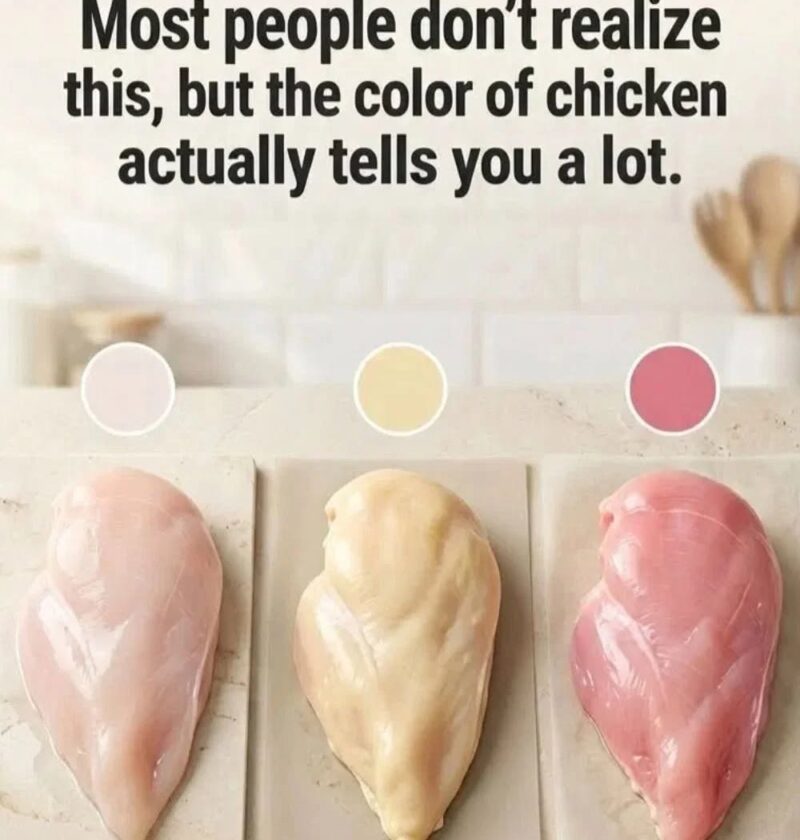
It sounds surprising on the surface, but the confusion makes sense because “chicken color” can mean a few different things, and most of them are not reliable indicators of quality or safety.
Let’s break it down clearly.
🍗 Chicken Color vs Quality — What People Think vs Reality
When people talk about chicken color, they may mean:
- Skin color (yellow vs white)
- Meat color (pink, pale, or darker)
- Fat color (yellow fat vs white fat)
👉 None of these alone reliably tell you if chicken is “better” or “healthier.”
🧠 1. Skin Color (Yellow vs White)
This is where most confusion happens.
🟡 Yellow chicken
Often comes from:
- Diet (corn or marigold pigments like xanthophylls)
- Free-range or corn-fed labeling in some regions
⚪ White chicken
Often comes from:
- Different feed
- Different breeds or farming systems
👉 Key truth:
Both can be equally safe and nutritious.
Color mainly reflects feed and breed, not quality.
🥩 2. Meat Color (Pink vs Pale)
Raw chicken meat is usually:
- Pinkish when fresh
- Pale when cooked or processed
What affects meat color:
- Age of chicken
- Muscle type
- Storage conditions
- Oxygen exposure
⚠️ Important:
- Slight color variation is normal
- Color alone does NOT determine freshness or safety
🧈 3. Fat Color (Yellow Fat vs White Fat)
Fat color is influenced by:
- Diet (more plant pigments → yellower fat)
- Outdoor vs indoor feeding
👉 Again:
This does not directly indicate quality.
🧪 What Actually Determines Chicken Quality
Real quality indicators include:
✔️ Freshness
- Smell (should be neutral)
- Texture (firm, not slimy)
✔️ Storage conditions
- Proper refrigeration
- No long exposure to heat
✔️ Hygiene and processing
- Clean handling
- Safe slaughter and packaging
✔️ Health of the bird
- Disease-free farming practices
- Proper feeding and care
⚠️ Why Color Is Misleading
People assume:
- Darker = healthier
- Whiter = processed
- Yellow = organic
But in reality:
👉 Color is mostly influenced by feed and genetics, not nutritional value or safety.
🧠 Example to Understand It Easily
Think of chicken like eggs:
- Egg shell color (white or brown) does NOT change nutrition
- Chicken skin color works similarly
📌 Key Takeaway
Chicken color (skin, meat, or fat) is not a reliable measure of quality. It is mostly influenced by diet, breed, and processing—not health or safety.
What really matters is:
- Freshness
- Proper storage
- Clean processing
- Trusted source
If you want, I can also explain:
- how to identify fresh vs spoiled chicken quickly
- or difference between farm-raised vs organic chicken
- or common myths about chicken nutrition and health