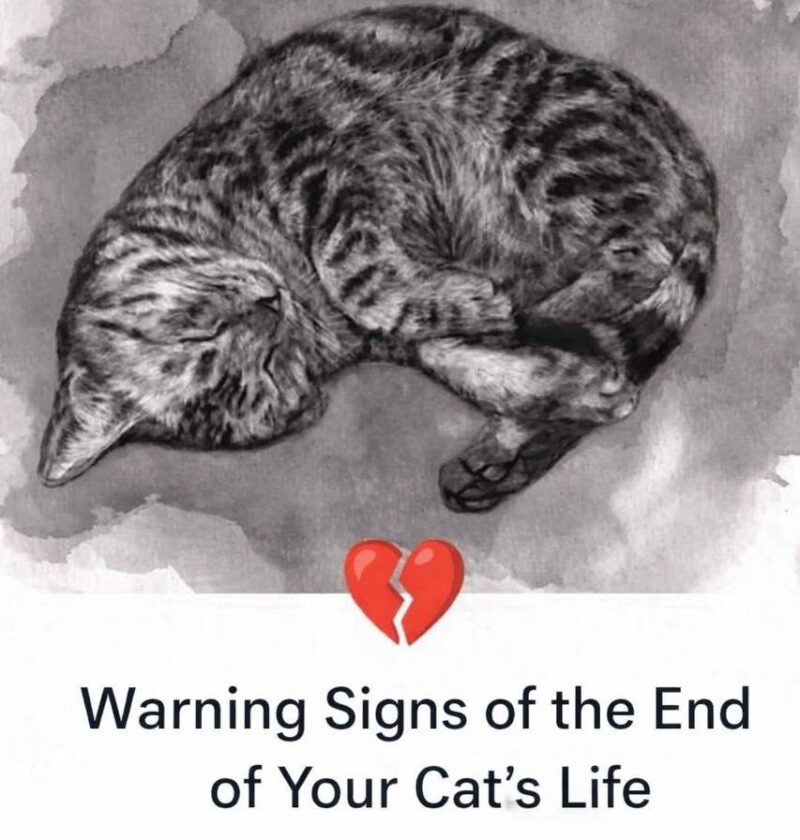
11 Signs Your Cat May Be Near the End of Life 🐱❤️
Cats often hide illness, so changes can be subtle. These signs do not always mean a cat is dying — some can happen with treatable illnesses — but they are reasons to contact a veterinarian, especially if several appear together.
1. Not Eating or Drinking 🍽️💧
A serious warning sign:
- Refusing food
- Eating much less than normal
- Losing interest in water
Cats can become weak quickly when they stop eating.
2. Extreme Tiredness or Weakness
You may notice:
- Sleeping much more
- Not wanting to play
- Difficulty standing or walking
- Hiding more than usual
3. Hiding or Seeking Isolation
Cats often hide when they feel:
- Sick
- In pain
- Vulnerable
A normally social cat becoming withdrawn is worth noticing.
4. Trouble Breathing
Warning signs:
- Fast breathing
- Open-mouth breathing
- Struggling to breathe
- Heavy effort from the belly
🚨 Breathing problems need urgent veterinary attention.
5. Changes in Grooming 🧼
A sick cat may:
- Stop cleaning itself
- Have a messy coat
- Look unkempt
Cats usually groom frequently, so a sudden change matters.
6. Weight Loss
Signs:
- Visible bones or spine
- Loose skin
- Loss of muscle
Gradual or sudden weight loss can indicate serious health problems.
7. Loss of Interest in Normal Activities
Your cat may stop:
- Jumping
- Exploring
- Playing
- Interacting
8. Changes in Bathroom Habits 🚽
Watch for:
- Not using the litter box
- Accidents
- Difficulty urinating
- Changes in stool
9. Pain or Discomfort
Possible signs:
- Crying or unusual vocalizing
- Restlessness
- Avoiding touch
- A tense body posture
Cats may show pain differently than dogs.
10. Confusion or Behavior Changes
Older cats may show:
- Wandering
- Staring into space
- Acting confused
- Changes in sleep patterns
11. Changes in Body Temperature or Appearance
Possible signs:
- Cold ears or paws
- Pale gums
- Weakness
- Reduced responsiveness
How to Help a Very Sick or Elderly Cat 🐾
✅ Keep them warm and comfortable
✅ Provide easy access to food, water, and litter
✅ Reduce stress and loud noises
✅ Offer gentle attention if they want it
✅ Speak with a veterinarian about pain control and quality of life
Seek Urgent Veterinary Care If:
🚨 Your cat is struggling to breathe
🚨 Cannot stand or walk
🚨 Has severe pain
🚨 Has not eaten for a significant period
🚨 Is unresponsive
A veterinarian can help determine whether your cat is experiencing a treatable illness, a chronic decline, or nearing the end of life.