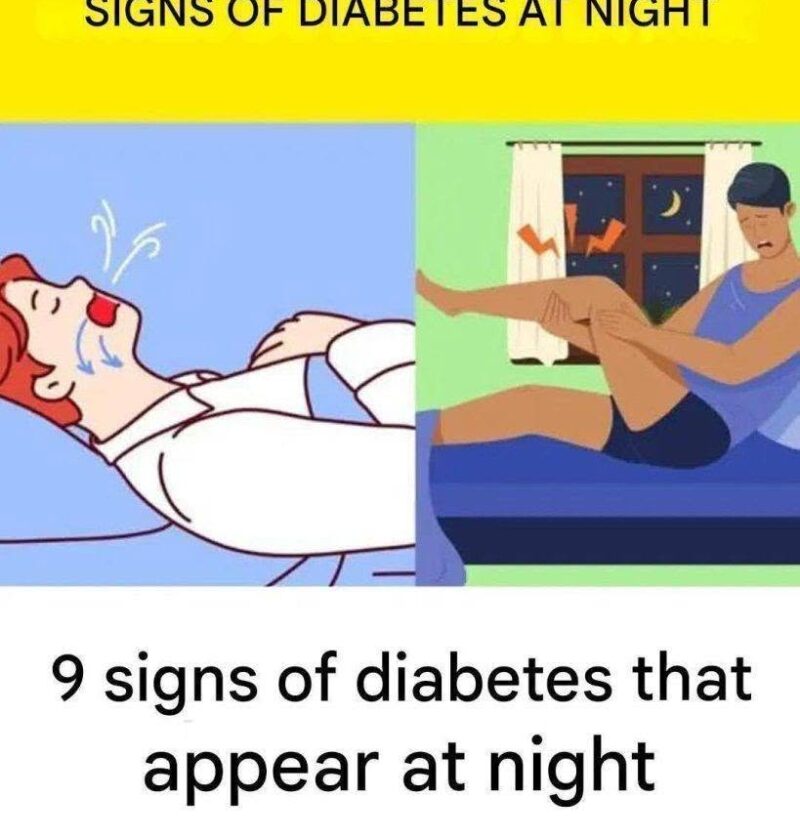
9 Signs of Diabetes That May Appear at Night 🌙🩸
Nighttime symptoms can sometimes be linked with high blood sugar (hyperglycemia), but these signs can also happen for many other reasons. The only way to know if someone has diabetes is with blood sugar testing (such as fasting glucose or HbA1c).
1. Waking Up Often to Urinate 🚽
Possible sign:
- Getting up several times during the night
- Passing more urine than usual
Why it can happen:
When blood sugar is high, the kidneys may try to remove extra glucose through urine, increasing urination.
2. Excessive Thirst at Night 💧
You may notice:
- Dry mouth
- Needing water beside your bed
- Feeling thirsty after waking
This can happen because frequent urination causes fluid loss.
3. Night Sweating 😓
Some people experience:
- Sweating during sleep
- Waking up feeling hot or uncomfortable
Night sweating has many causes, including blood sugar changes, hormones, stress, or infections.
4. Trouble Sleeping 😴
Blood sugar changes may contribute to:
- Restless sleep
- Frequent waking
- Feeling tired in the morning
5. Increased Hunger Before Bed 🍽️
Possible signs:
- Feeling hungry soon after eating
- Strong cravings at night
When the body cannot use glucose properly, some people may feel low energy.
6. Tingling or Burning Feet 🦶
Possible sensations:
- Pins and needles
- Burning feeling
- Numbness
Long-term high blood sugar can damage nerves in some people (diabetic neuropathy).
7. Dry Mouth or Dry Throat
Possible reasons:
- Dehydration from frequent urination
- High blood sugar levels
8. Blurry Vision
Blood sugar changes can affect fluid balance in the eyes and may cause temporary vision changes.
9. Morning Fatigue or Headaches
Poor sleep from nighttime symptoms may lead to:
- Tiredness after waking
- Low energy
- Head discomfort
Other Common Diabetes Warning Signs:
✅ Increased thirst
✅ Frequent urination
✅ Unexplained weight loss
✅ Slow-healing cuts
✅ Frequent infections
✅ Increased tiredness
What You Can Do:
- Check blood sugar if you have risk factors
- Maintain a balanced diet
- Stay physically active
- Limit sugary drinks
- Keep regular medical checkups
🚨 Seek medical advice promptly if you have severe thirst, vomiting, confusion, extreme weakness, or very frequent urination.
Night symptoms can be clues, but a blood test is the real way to confirm diabetes.