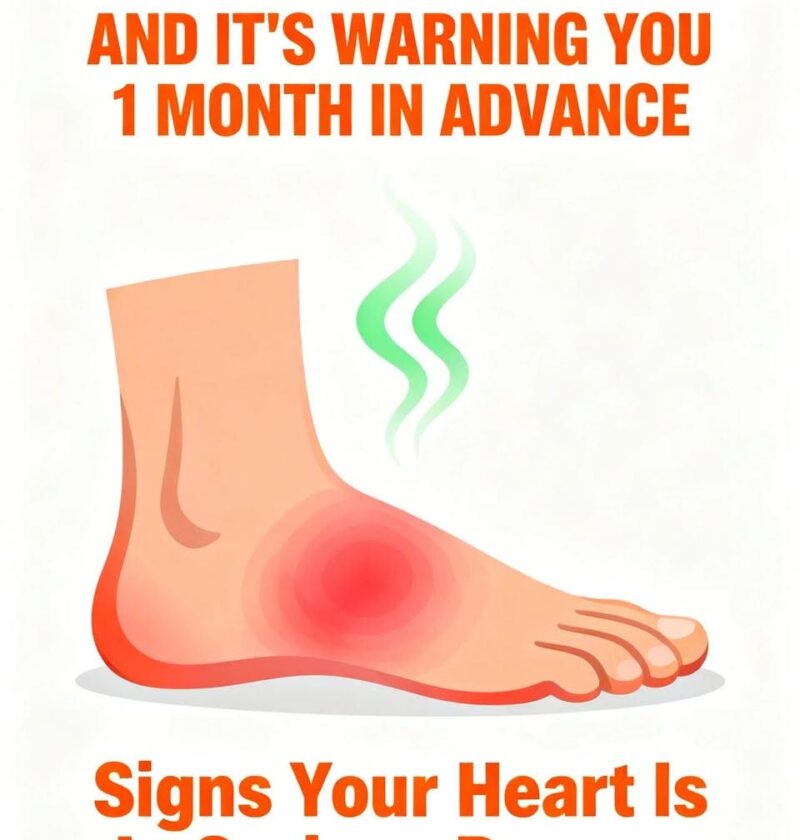
There isn’t a reliable way to say the heart “warns you exactly one month in advance.” Heart problems can build gradually in some people, but symptoms vary a lot, and serious cardiac events (like a heart attack or dangerous rhythm problem) can also happen suddenly without long warning.
That said, there are warning signs that may appear days to weeks before a serious heart event in some people—especially with conditions like coronary artery disease or worsening heart failure.
Here are the important ones to take seriously:
🚨 Possible early warning signs (days to weeks)
1) Chest discomfort with exertion
- Pressure, heaviness, tightness, or burning
- Happens when walking, climbing stairs, or stress
- Improves with rest
This can suggest reduced blood flow to the heart (angina).
2) Unusual fatigue
- Feeling “drained” doing simple tasks
- Needing frequent rest
- Not like normal tiredness
This is one of the most commonly overlooked early signs, especially in older adults.
3) Shortness of breath
- During light activity or even at rest
- Worsening over time
- Trouble lying flat comfortably
May suggest the heart is struggling to pump effectively.
4) Sleep disturbances
- Waking up breathless at night
- Needing extra pillows to sleep
- Restless sleep with chest discomfort
5) Reduced exercise tolerance
- Can’t walk as far as before
- Stairs feel harder than usual
- Slower recovery after activity
⚠️ Strong warning signs (seek urgent care)
These can indicate an active heart attack or serious emergency:
- Chest pain lasting more than 5–10 minutes
- Pain spreading to arm, jaw, neck, or back
- Sudden sweating, nausea, or vomiting
- Severe shortness of breath
- Fainting or near-fainting
- Rapid or irregular heartbeat with weakness
🧠 Important truth
- Some heart attacks come without clear warning signs
- Others have subtle symptoms that are easy to ignore
- Risk is higher if someone has:
- high blood pressure
- diabetes
- smoking history
- high cholesterol
- family history of heart disease
💡 Bottom line
Instead of a “1-month warning,” think of it as:
The body sometimes gives small, increasing signals of reduced heart function, but not always in a predictable timeline.
If you want, I can also explain:
- how to tell heart pain vs gas/anxiety pain
- or a simple checklist to estimate heart risk at home