New Method: Colonoscopy Will No Longer Be an Invasive Examination? (1/2)
You may have seen headlines such as:
“New method: colonoscopy will no longer be an invasive examination.”
These headlines are partly true but somewhat misleading. Researchers have developed several new technologies that may reduce the need for traditional colonoscopy in some people, but none have completely replaced it. As of today, a standard colonoscopy remains the most accurate and comprehensive test for detecting and removing precancerous polyps and diagnosing colorectal disease.
Let’s explore what these new methods are, how they work, and whether they can replace a traditional colonoscopy.
What Is a Colonoscopy?
A colonoscopy is a procedure in which a doctor inserts a long, flexible tube with a tiny camera (called a colonoscope) through the rectum to examine the inside of the large intestine (colon).
During the examination, the doctor can:
- Detect colon cancer.
- Find precancerous polyps.
- Remove polyps immediately.
- Take tissue samples (biopsies).
- Investigate bleeding.
- Diagnose inflammatory bowel diseases such as ulcerative colitis and Crohn’s disease.
The procedure usually takes 20–45 minutes and is commonly performed under sedation, so many people remember little or none of it.
Why Do Many People Avoid Colonoscopy?
Despite its effectiveness, many people postpone or avoid colonoscopy because of concerns such as:
- Fear of discomfort or embarrassment.
- Worry about sedation.
- Anxiety about possible complications.
- The need to drink a bowel-cleansing solution beforehand.
- Taking time off work.
- Fear of receiving bad news.
These concerns have motivated researchers to develop less invasive screening methods.
What Are the New Alternatives?
Several newer approaches are available or under development.
1. Stool DNA Tests (One of the Biggest Advances)
Instead of inserting a camera into the colon, this test analyzes a stool sample for:
- Hidden blood.
- Abnormal DNA shed by colon cancer or certain polyps.
How it works
The person collects a stool sample at home and mails it to a laboratory.
The test looks for genetic changes associated with colorectal cancer and advanced precancerous lesions.
Advantages
- No sedation.
- No hospital visit.
- No instruments inserted into the body.
- Convenient home testing.
Limitations
A positive result does not diagnose cancer. It means that a traditional colonoscopy is needed to determine the cause and, if necessary, remove polyps or take biopsies.
2. Fecal Immunochemical Test (FIT)
This is one of the most widely used screening tests worldwide.
It detects tiny amounts of blood in the stool that may come from:
- Colon cancer.
- Large polyps.
Benefits
- Inexpensive.
- Simple.
- No bowel preparation.
- Can be done at home.
- Usually repeated every year or two, depending on local recommendations and individual risk.
Drawback
Like stool DNA tests, it cannot remove polyps or identify the exact source of bleeding. Any abnormal result should be followed by a colonoscopy.
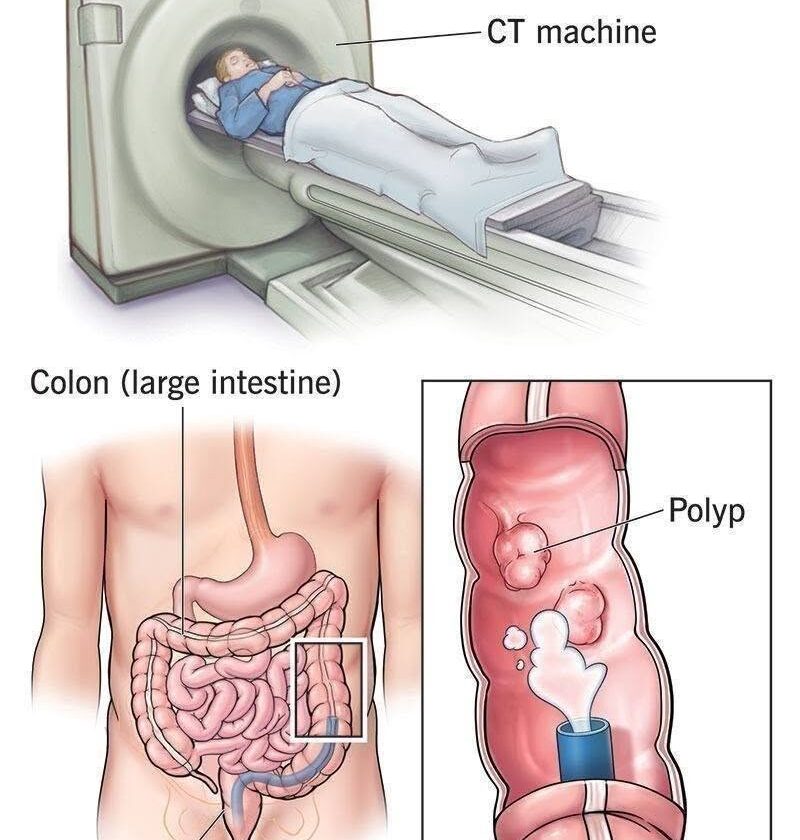
3. CT Colonography (“Virtual Colonoscopy”)
A CT colonography uses computed tomography (CT) scanning to create detailed images of the colon.
How it works
- The bowel still needs to be cleaned beforehand.
- A small tube is placed into the rectum to gently inflate the colon with air or carbon dioxide.
- CT images are taken.
- A computer reconstructs a three-dimensional view of the colon.
Advantages
- No long endoscope is inserted through the entire colon.
- Usually no sedation is needed.
- The examination is relatively quick.
Disadvantages
- Bowel preparation is still required.
- If a suspicious polyp is found, a standard colonoscopy is still needed to remove it or obtain a biopsy.
- It involves a small amount of radiation exposure.
4. Colon Capsule Endoscopy
One of the most exciting newer technologies is the colon capsule.
What is it?
The patient swallows a capsule about the size of a large vitamin pill.
Inside the capsule are:
- Tiny cameras.
- A light source.
- Batteries.
- A wireless transmitter.
As the capsule travels naturally through the digestive tract, it captures thousands of images that are transmitted to a recording device worn by the patient.
Eventually, the capsule passes naturally in the stool.
Advantages
- No sedation.
- No long tube inserted into the colon.
- Minimally invasive.
- Generally painless.
Limitations
- Thorough bowel preparation is still necessary.
- The capsule cannot remove polyps or perform biopsies.
- If abnormalities are detected, a conventional colonoscopy is usually required.
5. Blood-Based Screening Tests
Researchers have developed blood tests that look for biomarkers associated with colorectal cancer.
These tests aim to detect:
- Fragments of tumor DNA.
- Specific proteins.
- Other cancer-related molecules.
Potential benefits
- Simple blood draw.
- No bowel preparation.
- Convenient for patients who are reluctant to undergo other screening tests.
Current limitations
While some blood-based tests have shown promise for detecting colorectal cancer, they are generally less sensitive for finding precancerous polyps, which are important because removing them can prevent cancer from developing. A positive result still requires a colonoscopy for confirmation and treatment.
Can These New Methods Replace Colonoscopy?
For average-risk people undergoing routine screening, some non-invasive tests can be appropriate options depending on personal preference, risk factors, and local screening guidelines.
However, a traditional colonoscopy is still recommended in situations such as:
- A positive stool or blood screening test.
- Symptoms like rectal bleeding, unexplained iron-deficiency anemia, or persistent changes in bowel habits.
- A strong family history of colorectal cancer or certain inherited syndromes.
- Surveillance after previous polyps or colorectal cancer.
- The need to remove polyps or take biopsies.
The key advantage of colonoscopy is that it is both diagnostic and therapeutic: if a polyp is found, it can often be removed during the same procedure.
Why Is Colonoscopy Still Considered the Gold Standard?
A standard colonoscopy allows doctors to:
- View the entire lining of the colon directly.
- Detect very small polyps.
- Remove precancerous polyps immediately.
- Stop certain sources of bleeding.
- Obtain tissue samples for laboratory analysis.
Most alternative tests can identify people who may need further evaluation, but they cannot provide these treatments themselves.
Looking Ahead
Research continues into technologies that may make colorectal cancer screening even easier, including:
- Improved capsule endoscopy with enhanced imaging.
- More accurate blood-based screening tests.
- Artificial intelligence to help detect subtle polyps during colonoscopy.
- Advanced imaging techniques that may reduce missed lesions.
These innovations are making screening more accessible and may encourage more people to participate, which is one of the most important factors in reducing deaths from colorectal cancer.
Key Takeaways
The claim that “colonoscopy will no longer be an invasive examination” is an overstatement. Several promising alternatives—such as stool DNA tests, FIT, CT colonography, colon capsule endoscopy, and blood-based screening tests—can reduce the need for an invasive procedure in some people, particularly for routine screening. However, none of these methods can yet fully replace a conventional colonoscopy, especially when polyps need to be removed, biopsies are required, or symptoms suggest a higher likelihood of disease.
The most appropriate screening test depends on a person’s age, symptoms, family history, medical history, and preferences. If one of the non-invasive tests is abnormal, a traditional colonoscopy is generally the next step because it remains the most accurate way to examine the colon and treat abnormalities during the same procedure.