🦴 Hip Arthritis: Can Vitamins Help Address the Cause? Here’s What the Evidence Says
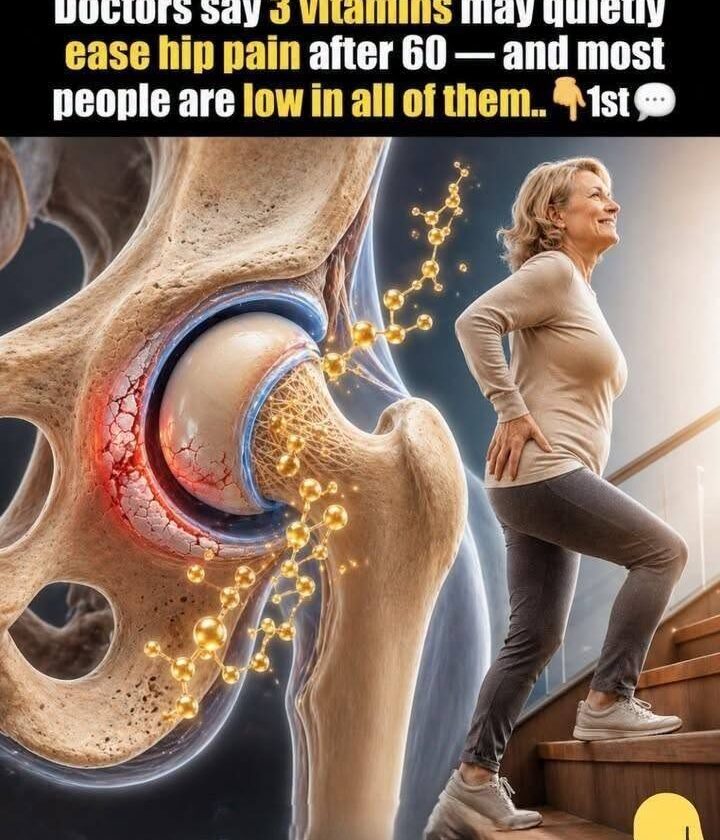
You may see headlines claiming that “3 vitamins reach what painkillers never do.” While certain vitamins are important for bone and joint health, no vitamin has been proven to cure hip arthritis or reverse the joint damage caused by osteoarthritis.
Pain relievers mainly help manage symptoms, while vitamins may support overall bone and muscle health—but they are not a substitute for medical treatment.
1. ☀️ Vitamin D
Vitamin D helps your body absorb calcium and is essential for healthy bones.
A deficiency can contribute to:
- Bone pain
- Muscle weakness
- Increased risk of falls
If you’re deficient, your healthcare provider may recommend supplements. However, taking extra vitamin D when your levels are already normal has not been shown to reverse osteoarthritis.
Food sources:
- Fatty fish
- Egg yolks
- Fortified milk and cereals
2. 🥛 Calcium
Calcium helps maintain strong bones.
Good sources include:
- Milk
- Yogurt
- Cheese
- Calcium-fortified plant-based beverages
- Leafy green vegetables
Calcium supports bone health but does not repair worn cartilage in the hip joint.
3. 🧡 Vitamin C
Vitamin C is needed to make collagen, a protein found in cartilage, tendons, and other connective tissues.
Foods rich in vitamin C include:
- Oranges
- Strawberries
- Kiwi
- Bell peppers
- Broccoli
While vitamin C is important for normal tissue health, there’s no strong evidence that high doses slow or reverse hip arthritis.
Other Ways to Manage Hip Arthritis
Research consistently supports these approaches:
✅ Regular low-impact exercise (walking, swimming, cycling)
✅ Strengthening the muscles around the hip
✅ Maintaining a healthy weight to reduce stress on the joint
✅ Physical therapy to improve movement and reduce pain
✅ Using pain-relieving medications as recommended by a healthcare professional
In more advanced cases, injections or hip replacement surgery may be considered.
Foods That Support Joint Health
A balanced diet may include:
🐟 Oily fish (rich in omega-3 fats)
🥜 Nuts and seeds
🫒 Olive oil
🥦 Colorful vegetables
🍓 Fruits
🌾 Whole grains
These foods support overall health and may help reduce inflammation as part of a healthy eating pattern.
When to See a Healthcare Professional
Seek medical advice if you have:
- Hip pain lasting more than a few weeks
- Pain that limits walking or daily activities
- Swelling, warmth, or redness around the joint
- Sudden severe pain after an injury
The Bottom Line 🦴
Vitamins such as vitamin D, calcium, and vitamin C are important for bone and overall musculoskeletal health, particularly if you’re deficient. However, they do not cure hip arthritis or rebuild damaged cartilage. The most effective management usually combines exercise, weight management (if needed), physical therapy, appropriate medications, and regular medical care.