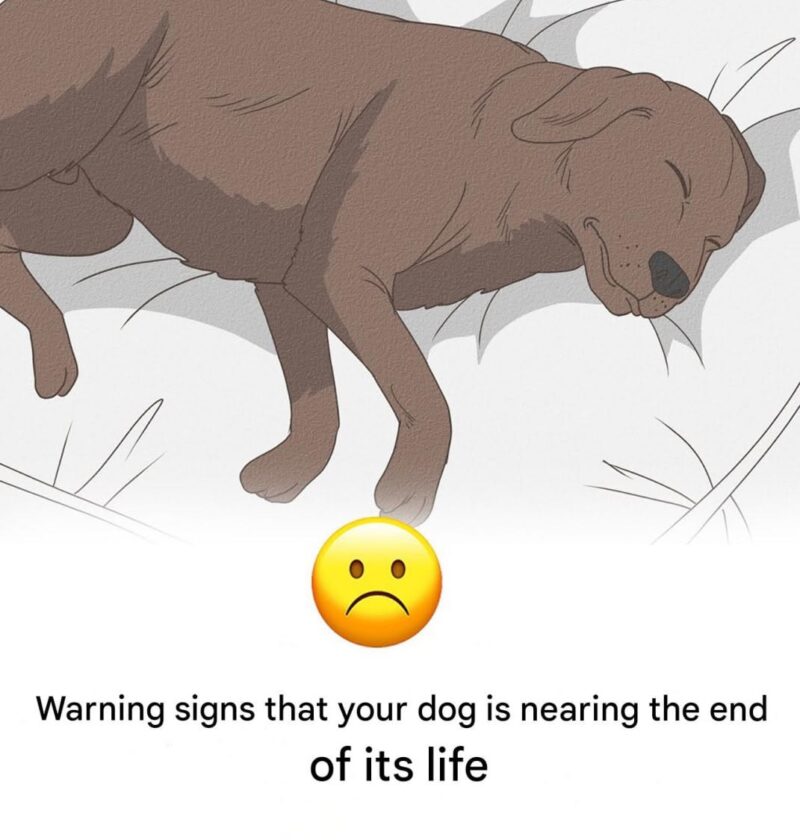
🐾 11 Signs Your Dog May Be Nearing the End of Life — What Pet Owners Should Know
Saying goodbye to a beloved dog is one of the hardest experiences for any pet owner. Dogs age differently depending on their breed, size, genetics, and health history. Some changes are normal parts of aging, while others may signal that a dog’s quality of life is declining.
These signs do not always mean your dog is dying, but if you notice several together, it may be time to speak with a veterinarian.
1. 💤 Sleeping Much More Than Usual
Older dogs often sleep more, but a major change may include:
- Sleeping most of the day
- Little interest in normal activities
- Less response to family members
This can happen with pain, weakness, illness, or natural aging.
2. 🍽️ Loss of Appetite or Refusing Food
A dog nearing the end of life may:
- Eat much less
- Lose interest in favorite treats
- Lose weight
- Have difficulty chewing or swallowing
A sudden loss of appetite can also be caused by treatable medical problems, so a vet check is important.
3. ⚖️ Weight Loss and Muscle Loss
You may notice:
- Ribs or bones becoming more visible
- Weakness
- Difficulty standing
- Reduced muscle around the legs
This can occur with chronic illness or advanced age.
4. 🚶 Trouble Walking or Getting Up
Signs may include:
- Slipping
- Stiffness
- Difficulty climbing stairs
- Needing help standing
- Spending more time lying down
Joint disease, pain, and weakness are common causes.
5. 😔 Loss of Interest in People or Activities
A dog may stop enjoying things they once loved:
- Playing
- Walks
- Greeting family
- Favorite toys
Some dogs become quieter or more withdrawn.
6. 🚽 Changes in Bathroom Habits
You may notice:
- Accidents indoors
- Loss of bladder control
- Difficulty going outside
- Changes in urine or stool
These can happen with aging, illness, or reduced mobility.
7. 😮💨 Breathing Changes
Possible concerning changes:
- Fast breathing at rest
- Difficulty breathing
- Persistent coughing
- Labored breathing
Breathing problems should be discussed with a veterinarian, especially if sudden.
8. 🩹 Increased Pain or Discomfort
Dogs often hide pain.
Signs can include:
- Restlessness
- Whining
- Trembling
- Avoiding touch
- Changes in posture
- Excessive licking of a painful area
Pain management can often improve comfort even in older pets.
9. 🧠 Confusion or Behavioral Changes
Some older dogs develop cognitive changes.
Signs may include:
- Getting stuck in corners
- Appearing confused
- Wandering at night
- Changes in sleep patterns
- Not recognizing familiar routines
10. 🧴 Poor Grooming and Coat Changes
A dog who is struggling may have:
- A dull coat
- More shedding
- Less self-cleaning
- Skin problems
This may happen because the dog lacks energy or feels unwell.
11. 💙 More Bad Days Than Good Days
One of the most important signs is overall quality of life.
Ask yourself:
- Does my dog still enjoy anything?
- Can they eat and drink comfortably?
- Can they move without severe distress?
- Do they have more comfortable days than painful ones?
Many veterinarians use quality-of-life assessments to help families make decisions.
What You Can Do to Help an Aging Dog
❤️ Schedule regular veterinary visits
❤️ Keep them comfortable and warm
❤️ Provide easy access to food and water
❤️ Use supportive bedding
❤️ Manage pain with veterinary guidance
❤️ Spend calm, loving time together
When to Seek Urgent Veterinary Care
Contact a veterinarian quickly if your dog has:
- Difficulty breathing
- Collapse or inability to stand
- Severe pain
- Repeated vomiting
- Seizures
- Not drinking water
- Sudden extreme weakness
The Bottom Line 🐶
Aging changes are part of a dog’s life, but noticeable declines in eating, movement, comfort, breathing, or interest can signal that your dog needs extra support. A veterinarian can help determine whether the issue is treatable, how to manage symptoms, and how to protect your dog’s comfort and quality of life. ❤️