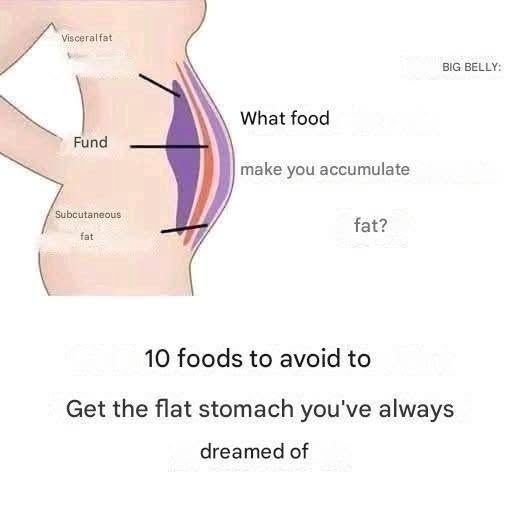
10 Foods to Limit If You Want a Flatter Stomach (Detailed Explanation)
The idea of getting a “flat stomach” is often simplified online, but the reality is that belly appearance is influenced by many factors, including body fat, digestion, muscle tone, hormones, genetics, hydration, and bloating.
No single food automatically causes belly fat, and avoiding certain foods will not magically flatten the stomach overnight. However, some foods can contribute to bloating, water retention, digestive discomfort, or excess calorie intake, which can make the abdomen look larger.
Here are 10 foods that many people benefit from reducing.
1. Sugary drinks
Examples:
- Soda
- Sweetened iced tea
- Energy drinks
- Sugary coffee drinks
- Fruit drinks with added sugar
Why they may affect belly size:
Liquid calories are easy to consume quickly and often do not create the same feeling of fullness as solid food.
High sugar intake can contribute to:
- Excess calorie intake
- Increased fat storage when calories exceed needs
- Blood sugar swings
Better choices:
- Water
- Sparkling water without added sugar
- Unsweetened tea
- Coffee with minimal added sugar
2. Refined carbohydrates
Examples:
- White bread
- Many pastries
- Some crackers
- Refined pasta products
Why they may contribute:
Refined carbohydrates are often:
- Low in fiber.
- Digested quickly.
- Less filling than whole-grain alternatives.
Replacing some refined grains with high-fiber carbohydrates may help with fullness and appetite control.
Better choices:
- Oats
- Brown rice
- Whole-grain bread
- Beans
- Vegetables
3. Processed meats
Examples:
- Bacon
- Sausages
- Hot dogs
- Some deli meats
Why limit them:
They can be:
- High in sodium.
- High in saturated fat.
- Highly processed.
High sodium intake can cause temporary water retention, making some people feel more bloated.
Better choices:
- Fish
- Eggs
- Chicken
- Beans
- Lentils
4. Fried foods
Examples:
- French fries
- Fried chicken
- Fried snacks
Why they may affect the stomach:
Fried foods are often:
- High in calories.
- High in fat.
- Slower to digest.
Some people experience:
- Fullness
- Acid reflux
- Digestive discomfort
5. Alcohol (especially excess intake)
Alcohol can contribute to:
- Extra calories.
- Poor sleep quality.
- Increased appetite.
- Temporary bloating.
Some alcoholic drinks also contain sugar and carbonation.
Moderation is important because occasional consumption does not automatically prevent a healthy body composition.
6. High-sodium foods
Examples:
- Chips
- Instant noodles
- Fast food
- Packaged snacks
- Many ready-made meals
Why they affect appearance:
Sodium causes the body to hold water.
This can lead to:
- Puffy appearance.
- Temporary weight increases.
- Feeling bloated.
Reducing sodium and increasing potassium-rich foods can help maintain fluid balance.
7. Foods that trigger personal bloating
Not everyone reacts to the same foods.
Common triggers include:
- Beans
- Onions
- Garlic
- Certain dairy products
- Some artificial sweeteners
These foods are not “bad”—they simply may cause gas or bloating in some individuals.
Keeping a food diary can help identify personal triggers.
8. Sugary desserts
Examples:
- Cakes
- Cookies
- Candy
- Ice cream
These foods can be part of a balanced diet, but frequent large portions may make weight management harder because they are often:
- High in calories.
- Low in fiber.
- Easy to overeat.
9. Highly processed snack foods
Examples:
- Chips
- Snack cakes
- Packaged cookies
- Some protein bars with lots of added ingredients
They often combine:
- Refined carbohydrates
- Added fats
- Salt
- Added sugars
This combination can make it easy to consume more calories than intended.
10. Carbonated drinks
Examples:
- Soda
- Sparkling beverages
- Carbonated energy drinks
The carbonation itself can cause temporary:
- Gas buildup.
- Burping.
- Abdominal fullness.
This is different from gaining fat—it is often just digestive bloating.
Foods that can support a flatter-looking stomach
Instead of only removing foods, focus on adding:
Protein-rich foods
Help maintain muscle and improve fullness:
- Eggs
- Fish
- Greek yogurt
- Chicken
- Legumes
High-fiber foods
Support digestion:
- Vegetables
- Fruits
- Whole grains
- Beans
Hydrating foods
Help normal fluid balance:
- Cucumbers
- Melons
- Leafy greens
Probiotic foods
May support gut health:
- Yogurt with live cultures
- Kefir
- Fermented foods
Important: belly fat vs. bloating
A “larger stomach” can come from different things:
Bloating
- Changes throughout the day.
- Often related to digestion, gas, or fluid.
Body fat
- Develops gradually.
- Requires a consistent calorie surplus.
- Reduced through long-term lifestyle changes.
The solution depends on the cause.
Bottom line
For a flatter stomach, you do not need to eliminate all enjoyable foods. The biggest improvements usually come from:
- Eating enough protein and fiber.
- Limiting excess sugar and highly processed foods.
- Watching sodium intake.
- Staying active.
- Identifying foods that personally trigger bloating.
A sustainable eating pattern works better than a strict “forbidden foods” list.