🍉 You Cut Open a Watermelon and See Cracks? Should You Stop Eating It? Here’s What It Means
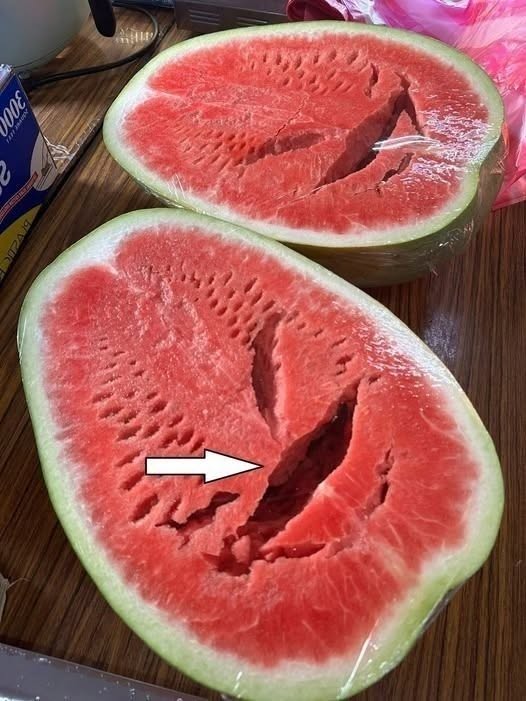
If you cut open a watermelon and notice cracks, splits, or unusual patterns inside, don’t panic. Not every crack means the watermelon is dangerous. The meaning depends on what the cracks look like and whether there are other signs of spoilage.
🍉 1. Hollow Heart (Internal Cracks)
A common cause is a condition called hollow heart.
It looks like:
- Cracks or gaps in the center
- Empty spaces inside the flesh
- Sometimes a star-like pattern
Why it happens:
- Uneven growth
- Stress during development
- Changes in water supply
✅ Usually safe to eat if:
- The flesh smells normal
- The texture is fresh
- There is no mold or slime
The taste may be affected, but it is not automatically spoiled.
🍉 2. Overripe or Breaking Down
Be cautious if the cracks come with:
- Soft or mushy texture
- Fermented or sour smell
- Fizzy bubbles
- Strange taste
- Slimy flesh
These can be signs the watermelon is spoiling.
❌ Better to throw it away.
🍉 3. Large Internal Splits Near the Rind
Sometimes watermelons develop internal damage from:
- Handling
- Pressure
- Growing conditions
If the fruit still looks, smells, and tastes normal, it may be okay, but inspect carefully.
🚫 Signs You Should Not Eat It
Discard the watermelon if you notice:
- Mold
- Bad odor
- Sour or alcoholic smell
- Slimy texture
- Dark, rotten areas
- Unusual discoloration spreading
How to Pick a Good Watermelon
Look for:
✅ A creamy yellow field spot (where it rested on the ground)
✅ A heavy feeling for its size
✅ A dry brown stem (if attached)
✅ A deep hollow sound when tapped
✅ Firm, intact skin
The Bottom Line 🍉
Cracks inside a watermelon do not automatically mean it is unsafe. Many are caused by natural growth issues like hollow heart. Check the smell, texture, and appearance—if it seems spoiled, throw it away. If it looks and smells fresh, it is often still safe to eat.