My Grandpa Had a Foolproof Trick to Fix Dead Grass Patches with Almost Zero Work. Here’s How It Works
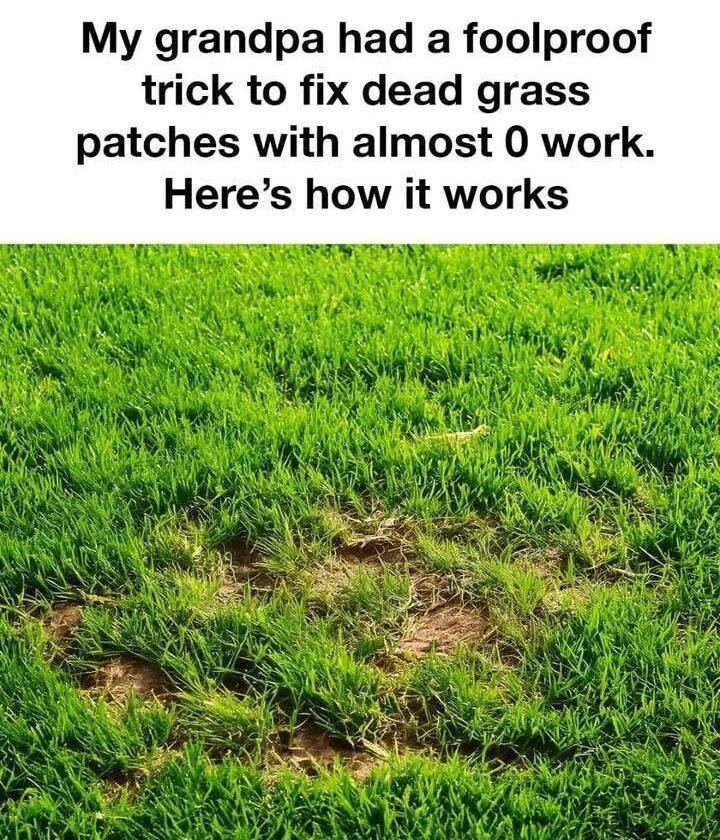
Dead or bare patches in a lawn are a common problem. They can be caused by drought, heavy foot traffic, pet urine, compacted soil, insects, fungal diseases, or simply thin grass growth. While there’s no miracle fix that works in five minutes, you can repair many patches with minimal effort using a simple overseeding method.
Step 1: Find the Cause
Before repairing the patch, identify why the grass died. Otherwise, the problem may return.
Common causes include:
- Too little water
- Too much foot traffic
- Pet urine
- Compacted soil
- Insect damage
- Lawn diseases
- Too much shade
- Mowing too short (“scalping”)
Correcting the underlying issue gives new grass the best chance to thrive.
Step 2: Remove Dead Grass
Using a garden rake, remove:
- Dead grass
- Leaves
- Thatch
- Loose debris
This exposes the soil so new seeds can make good contact.
Step 3: Loosen the Soil
Scratch the top 1–2 inches (2.5–5 cm) of soil with a rake or hand cultivator.
Loose soil helps:
- Seeds settle properly
- Roots grow deeper
- Water soak in more easily
Step 4: Add Compost or Topsoil
Spread a thin layer (about ¼–½ inch) of:
- Compost
- Lawn topsoil
- A quality garden soil mix
This improves moisture retention and provides nutrients for new seedlings.
Step 5: Spread Grass Seed
Choose a grass seed that matches the rest of your lawn.
Scatter the seed evenly over the bare area. Follow the seeding rate on the package—using too much seed can lead to overcrowding.
Lightly rake again so the seed is covered by a thin layer of soil.
Step 6: Water Gently
Keep the area consistently moist until the seeds germinate.
A good approach is:
- Light watering once or twice daily if the weather is warm and dry
- Avoid soaking the soil or creating puddles
Once the new grass is established, water less often but more deeply.
Grandpa’s “Low-Effort” Trick
Many gardeners use a simple mixture of:
- Grass seed
- Compost or topsoil
Spread the mixture directly over the bare patch, water it well, and let nature do the rest. The compost helps retain moisture around the seeds, improving germination without much ongoing work.
Some people also cover the patch with a thin layer of clean straw to reduce moisture loss and discourage birds from eating the seeds.
Tips for Faster Results
- Repair patches during your grass type’s ideal growing season (cool-season grasses do best in early fall or spring; warm-season grasses in late spring or early summer).
- Avoid walking on newly seeded areas.
- Wait until the new grass reaches about 3–4 inches (7.5–10 cm) before mowing.
- Use a sharp mower blade to avoid damaging young grass.
When New Seed Won’t Help
If patches continue to die despite reseeding, the problem may be due to:
- A lawn disease
- Grubs or other insects
- Severe soil compaction
- Poor drainage
- Excessive shade
In those cases, treating the underlying issue is more important than simply adding new seed.
The Bottom Line
There isn’t a magical five-minute fix for dead grass, but repairing bare spots can be surprisingly easy. Removing dead material, loosening the soil, adding a little compost, spreading matching grass seed, and keeping the area moist are often enough to restore a healthy lawn with relatively little effort. Patience is key—most grass seed takes 1–3 weeks to germinate, depending on the variety and growing conditions.