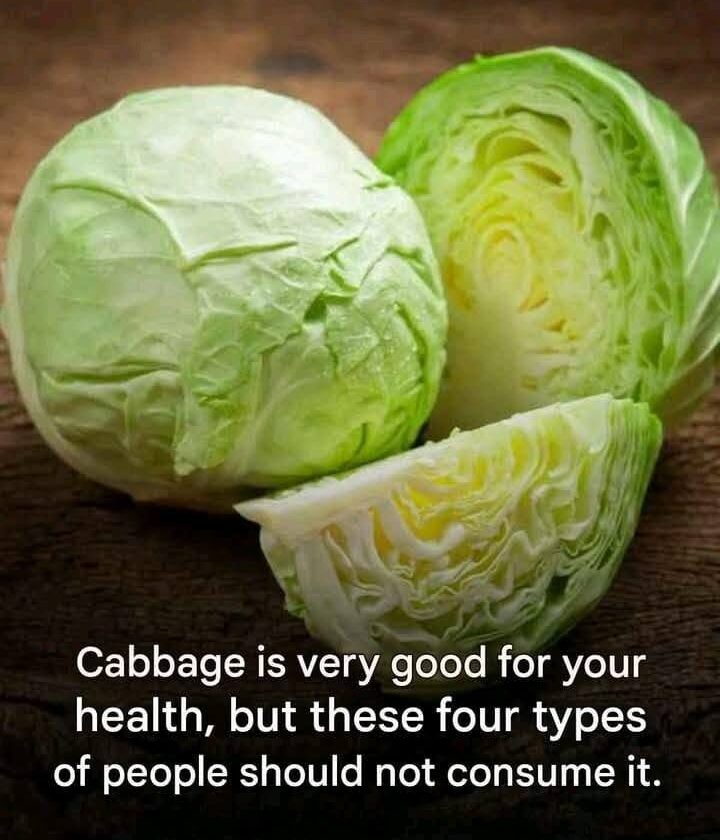
🥬 The 4 Types of People Who Should Be Careful With Cabbage
Headlines like “The 4 types of people who shouldn’t eat cabbage” are often exaggerated. In reality, cabbage is a very healthy vegetable and is safe for most people. It is rich in fiber, vitamins (especially vitamin C and K), and antioxidants.
However, like many healthy foods, there are a few situations where certain people should limit or be cautious with cabbage.
Let’s break it down clearly and realistically.
🥬 First: Is Cabbage Healthy?
Yes. Cabbage is generally:
- Low in calories
- High in fiber
- Rich in vitamin C and vitamin K
- Good for digestion (in normal amounts)
- Contains antioxidants that support overall health
It is part of the cruciferous vegetable family (like broccoli and kale).
But in some cases, it may cause discomfort or interact with certain health conditions.
1. 🫃 People with Digestive Sensitivity (Bloating or IBS)
Cabbage contains natural compounds called fermentable carbohydrates (FODMAPs) and sulfur compounds.
What can happen:
- Gas
- Bloating
- Stomach cramps
- Discomfort
People with sensitive digestion or conditions like irritable bowel syndrome may find raw cabbage especially hard to tolerate.
Better approach:
- Eat cooked cabbage instead of raw
- Start with small portions
- Avoid combining with other gas-producing foods
2. 🦋 People with Thyroid Issues (in large amounts)
Cabbage is a cruciferous vegetable, which contains natural substances called goitrogens.
Why this matters:
Goitrogens can interfere with iodine absorption in very large amounts.
This is mainly a concern for people with:
- Hypothyroidism
- Iodine deficiency
Important truth:
- Normal food portions of cabbage are generally safe
- Problems are usually seen only with very large, frequent raw intake
Better approach:
- Cook cabbage (reduces goitrogen effect)
- Maintain adequate iodine intake (salt, fish, dairy if used)
3. 🧠 People Taking Blood-Thinning Medication
Cabbage is high in vitamin K, which plays a key role in blood clotting.
Why it matters:
People taking anticoagulant medication such as:
- Warfarin (blood thinner)
must keep vitamin K intake consistent.
What can happen:
- Sudden large increases in cabbage intake may affect medication balance
Important note:
This does NOT mean cabbage is forbidden—it just means:
✔ Consistency matters more than avoidance
✔ Sudden dietary changes should be avoided
4. 🩺 People with Kidney Issues (in some cases)
Cabbage contains potassium, though not extremely high compared to other vegetables.
For people with severe kidney disease:
- Potassium levels must be monitored carefully
- Diet may need restriction based on medical advice
Related condition:
- Chronic kidney disease
Better approach:
- Follow doctor-recommended diet plan
- Control portion size if advised
🧠 Important Reality Check
Despite viral headlines, cabbage does NOT:
- Damage healthy kidneys
- Harm most thyroids in normal amounts
- Cause disease
- Need to be avoided by most people
For the majority of individuals, cabbage is a safe and beneficial vegetable.
🥗 Health Benefits of Cabbage (Why Most People SHOULD Eat It)
When tolerated well, cabbage may:
❤️ Support heart health
- Low in calories
- Helps manage weight
🧠 Support digestion
- High fiber content
🛡️ Boost immunity
- Rich in vitamin C
🦴 Support bones
- Contains vitamin K and minerals
🧬 Provide antioxidants
- Helps protect cells from damage
🍽️ How to Eat Cabbage More Comfortably
If you want to reduce side effects:
- Cook or steam it instead of eating raw
- Start with small portions
- Add digestive spices (ginger, cumin)
- Avoid overeating in one sitting
📌 Key Takeaway
Cabbage is a highly nutritious vegetable for most people, but a few groups may need to be cautious:
- People with sensitive digestion
- People with hypothyroidism (large raw amounts)
- People on blood-thinning medication
- People with advanced kidney disease
For everyone else, cabbage is safe and healthy when eaten in normal portions.
If you want, I can also explain:
- best vegetables for seniors over 60
- foods that reduce bloating and gas naturally
- or healthiest ways to cook cabbage without side effects