Nail Lines: What They Can Reveal About Your Health 💅🩺
Your fingernails can offer clues about your overall health. While many nail changes are harmless and simply part of aging or minor injuries, certain lines, ridges, or color changes may occasionally point to an underlying medical condition. Understanding what different nail lines mean can help you know when a change is normal—and when it’s worth discussing with a healthcare professional.
How Healthy Nails Should Look
Healthy nails are typically:
- Smooth and firm
- Uniform in color
- Free of deep grooves or pits
- Attached securely to the nail bed
- Growing steadily without splitting excessively
Small changes can occur naturally with age.
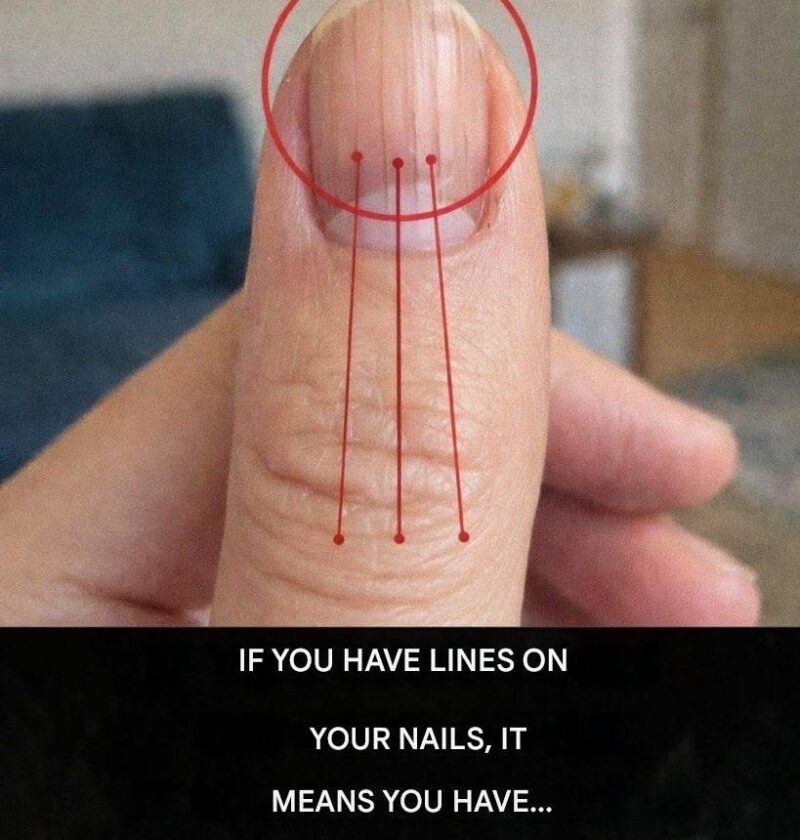
1. Vertical Ridges (Most Common)
Vertical ridges run from the base of the nail to the tip.
Common causes:
- Natural aging
- Mild dehydration
- Minor trauma to the nail
These ridges are very common in older adults and are usually not a cause for concern.
2. Horizontal Lines (Beau’s Lines)
Horizontal grooves that extend across the nail are known as Beau’s lines.
They can develop after:
- A high fever
- Major surgery
- Severe illness
- Significant physical stress
- Injury to the nail
These lines occur because nail growth temporarily slows or stops. As the nail grows, the groove gradually moves toward the tip.
3. White Horizontal Lines
White lines across the nail may have different causes depending on their appearance.
Possible causes include:
- Minor nail injury
- Certain medications
- Occasionally, underlying medical conditions
Persistent or multiple white lines affecting several nails should be evaluated by a healthcare professional.
4. Dark Vertical Lines ⚠️
A dark brown or black stripe running from the base to the tip of the nail deserves attention, especially if it:
- Appears suddenly
- Becomes wider
- Has irregular borders
- Extends onto the surrounding skin
While many dark nail streaks are harmless—particularly in people with naturally darker skin tones—a new or changing dark line should be assessed by a dermatologist to rule out serious conditions, including a rare form of skin cancer under the nail.
5. Spoon-Shaped Nails
When nails curve upward like a spoon, they may be associated with:
- Iron deficiency
- Repeated chemical exposure
- Certain inherited conditions
Not everyone with spoon-shaped nails has a medical problem, but persistent changes should be evaluated.
6. Yellow Nails
Yellow nails may occur because of:
- Nail polish staining
- Fungal infections
- Smoking
- Certain medical conditions
If nails become thick, brittle, or separate from the nail bed, medical evaluation may be needed.
7. Clubbing
Clubbing causes the fingertips to enlarge and the nails to curve downward.
This change can sometimes be associated with long-term conditions affecting the:
- Lungs
- Heart
- Digestive system
Clubbing should always be evaluated by a healthcare professional.
8. Brittle or Splitting Nails
Common causes include:
- Frequent hand washing
- Dry weather
- Repeated exposure to cleaning products
- Aging
Less commonly, brittle nails may be related to nutritional deficiencies or certain medical conditions.
9. Nail Pitting
Tiny dents or pits in the nail surface may be associated with:
- Psoriasis
- Eczema
- Alopecia areata
If nail pitting occurs with skin changes or joint pain, seek medical advice.
10. Blue or Purple Nails
Bluish nails can indicate that the blood isn’t carrying enough oxygen.
Possible causes include:
- Cold temperatures
- Poor circulation
- Heart or lung conditions
Blue nails that don’t improve after warming up require prompt medical attention.
How to Keep Your Nails Healthy
Simple habits include:
✅ Eat a balanced diet rich in protein, iron, zinc, and vitamins.
✅ Keep nails clean and dry.
✅ Moisturize your hands and cuticles regularly.
✅ Wear gloves when using cleaning products.
✅ Avoid biting or picking at your nails.
✅ Trim nails regularly using clean nail clippers.
When to See a Doctor
Schedule a medical evaluation if you notice:
- A new dark streak under a nail
- Nail changes affecting many nails at once
- Pain, swelling, or pus around a nail
- Nails separating from the nail bed
- Changes that persist or worsen without an obvious cause
These symptoms don’t always indicate a serious problem, but they deserve professional assessment.
Final Takeaway
Your nails can sometimes reflect changes in your overall health, but most nail lines and ridges—especially vertical ridges—are a normal part of aging. Rather than trying to diagnose yourself based on nail appearance alone, pay attention to new, persistent, or unusual changes, especially dark streaks, deep grooves, or changes accompanied by other symptoms.
Regular nail care, a balanced diet, and routine medical checkups are the best ways to keep both your nails and your overall health in good condition. 💅✨