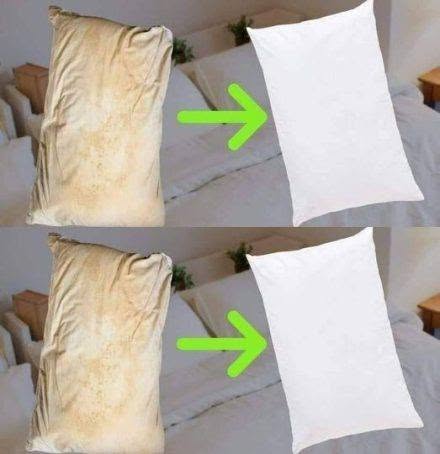
Here’s How to Clean Dirty Bed Pillows to Leave Them White and Smelling Fresh
Introduction
Bed pillows collect sweat, body oils, dead skin cells, dust, saliva, and dust mites over time. Even when protected by pillowcases, they can gradually become yellowed, develop odors, and lose their freshness.
Most pillows can be safely cleaned at home, but the correct method depends on the filling material. Washing a pillow incorrectly can damage its shape or filling, so it’s important to check the care label before cleaning.
This guide explains how to clean different types of pillows, remove stains and odors, and help keep them looking and smelling fresh.
Step 1: Identify Your Pillow Type
Before washing, determine what your pillow is made of.
Machine-Washable Pillows
Most of these can usually be washed:
- Polyester fiberfill
- Down
- Feather
- Some down-alternative pillows
Usually Not Machine Washable
These often require special care:
- Memory foam
- Latex foam
- Solid foam pillows
Always follow the manufacturer’s care instructions.
Step 2: Gather Your Supplies
Cleaning Supplies
- Mild liquid laundry detergent
- Oxygen-based bleach (optional, for whitening and stain removal)
- White vinegar (optional, for odor removal during the rinse cycle)
- Soft cloth
- Soft-bristled brush
- Clean towels
Avoid using too much detergent, as it can be difficult to rinse out of pillows.
Step 3: Remove Pillowcases and Protectors
Take off:
- Pillowcases
- Pillow protectors
- Decorative covers
Wash these separately according to their care labels.
Step 4: Treat Yellow Stains
Yellow stains are usually caused by:
- Sweat
- Body oils
- Saliva
- Moisture
Stain Treatment
- Mix:
- A small amount of liquid laundry detergent
- Warm water
- Apply to stained areas.
- Gently rub with a soft cloth or brush.
- Let sit for 15–30 minutes.
- Do not scrub aggressively, as this may damage the fabric.
For stubborn stains on washable white pillows, an oxygen-based bleach may help when used according to the product directions.
Step 5: Machine Wash (If Allowed)
Washing Instructions
Place two pillows in the washing machine if possible. This helps balance the load.
Water Temperature
Use:
- Warm water for most washable pillows
- Follow the care label if it specifies cold water
Wash Cycle
Choose:
- Gentle or delicate cycle
- Extra rinse cycle if available
The extra rinse helps remove detergent residue.
Step 6: Optional Odor Removal
If your washing machine allows it, adding ½ cup of white vinegar during the rinse cycle may help neutralize lingering odors.
Do not mix vinegar directly with bleach products.
Step 7: Dry Thoroughly
Proper drying is essential to prevent mildew.
Dryer Method
Use:
- Low heat
- Air-fluff setting if recommended
Add:
- Dryer balls
- Clean tennis balls placed inside clean socks
These help restore the pillow’s loft by preventing clumping.
Drying Time
Pillows often require:
- 1–3 hours, depending on the filling and dryer
Pause occasionally to fluff them by hand.
Step 8: Air Dry if Needed
After machine drying, allow pillows to air dry for several hours if they still feel damp.
Never use a pillow that retains moisture inside, as this can encourage mold or mildew growth.
Cleaning Memory Foam Pillows
Memory foam should generally not be placed in a washing machine.
Instead:
- Vacuum the surface using an upholstery attachment.
- Spot clean stains with a damp cloth and mild detergent.
- Avoid soaking the foam.
- Air dry completely in a well-ventilated area away from direct heat.
Cleaning Feather or Down Pillows
These can often be machine washed, but:
- Use a gentle detergent.
- Wash on a delicate cycle.
- Dry completely on low heat.
- Fluff regularly during drying.
Incomplete drying may leave feathers with a musty odor.
How to Keep Pillows Smelling Fresh
Wash Pillowcases Weekly
Fresh pillowcases reduce the buildup of sweat and oils.
Use Pillow Protectors
A zippered protector helps shield the pillow from stains, allergens, and moisture.
Air Out Your Pillows
On a dry day, place pillows in a well-ventilated area for a few hours to help reduce moisture and odors. Avoid prolonged exposure to direct sunlight if the care instructions advise against it.
Keep Hair Clean Before Bed
Hair products and natural oils can transfer to pillows over time.
How Often Should You Wash Pillows?
A general guideline is:
- Every 3–6 months for most washable pillows.
- Pillowcases: Every 1–2 weeks.
- Pillow protectors: Every 1–2 months, or more often if needed.
When Should You Replace a Pillow?
Even with regular cleaning, pillows don’t last forever.
Consider replacing your pillow if:
- It stays flat after fluffing.
- It has permanent stains or odors.
- The filling is lumpy or uneven.
- You wake with neck discomfort.
- It is several years old and no longer provides proper support.
The lifespan varies depending on the pillow material and how well it has been maintained.
Common Mistakes to Avoid
- Using too much detergent.
- Washing foam pillows in the machine if the care label advises against it.
- Drying on high heat, which can damage some fillings.
- Storing pillows while they are still damp.
- Ignoring the care label.
Frequently Asked Questions
Can baking soda whiten pillows?
Baking soda can help reduce odors, but it is not a powerful whitening agent. Oxygen-based bleach is generally more effective for removing yellow stains from washable white pillows when used according to the instructions.
Can I use chlorine bleach?
Chlorine bleach can weaken some fabrics and fillings over time. Many manufacturers recommend oxygen-based bleach instead for washable white pillows. Always check the care label.
Why do pillows turn yellow?
Yellowing is usually caused by sweat, natural skin oils, saliva, moisture, and the gradual accumulation of dirt over time.
How can I make pillows smell fresh naturally?
Regular washing, thorough drying, clean pillowcases, and good bedroom ventilation are the most reliable ways to keep pillows smelling fresh.
Summary
Keeping bed pillows clean helps improve hygiene, comfort, and freshness. Most polyester, feather, and down pillows can be washed with a mild detergent on a gentle cycle, while memory foam pillows are usually best spot-cleaned. Treat stains before washing, dry pillows thoroughly, and use pillow protectors to extend their lifespan. With routine care every few months, your pillows can stay cleaner, fresher, and more comfortable for a better night’s sleep.