That’s another viral “hack-style” claim, and it’s partly based on a real cleaning method, but it’s often exaggerated.
Let’s break it down properly so you know what actually works and what to watch out for.
🧽 “Clean oven racks with 1 plastic bag and they’re like new” — does it work?
Yes—the plastic bag method can help loosen grease and grime, but it doesn’t magically restore racks to brand new condition in every case.
It works best for:
- Light to moderate grease buildup
- Regular maintenance cleaning
- Racks that haven’t been heavily burnt or rusted
For heavy carbon buildup, you still need scrubbing.
🧪 What the method usually is
Most versions of this hack involve:
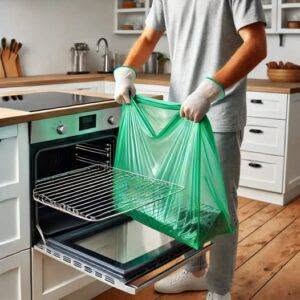
- A large plastic trash bag
- Ammonia or a cleaning solution
- Sealing the rack inside overnight
This is similar to a chemical “fume cleaning” process, not a scrubbing method.
⚗️ Why it works (the real science)
If ammonia is used, it produces vapors that:
- Break down grease and baked-on oils
- Soften hardened food residue
- Make grime easier to wipe off
So the bag acts like a sealed cleaning chamber, not the cleaning agent itself.
⚠️ Important safety warning
This is the part most viral posts ignore:
❌ Never mix chemicals
- Do NOT mix ammonia with bleach
→ produces toxic chlorine gas
❌ Use in a ventilated area
- Ammonia fumes are strong and irritating
❌ Avoid thin or weak plastic bags
- They can leak or tear
🧼 Step-by-step safe version of the method
✔ What you need:
- Heavy-duty garbage bag
- Household ammonia (or mild cleaner)
- Outdoor space or ventilated area
Step 1: Place rack in bag
Put the oven rack inside a sealed plastic bag.
Step 2: Add cleaning agent
- Pour a small amount of ammonia (or place a soaked cloth inside)
You do NOT need to submerge it.
Step 3: Seal tightly
Close the bag securely to trap vapors.
Step 4: Let it sit
- 8–12 hours (overnight is common)
Step 5: Remove and rinse
- Open bag outdoors
- Rinse rack with warm water
- Wipe off loosened grime
Step 6: Light scrubbing if needed
Use:
- Sponge
- Baking soda paste (for stubborn spots)
🧠 When this method is NOT enough
You may still need manual cleaning if:
- Grease is baked on thickly
- There is heavy carbon buildup
- Rust is present
- Racks haven’t been cleaned for years
🧼 Safer alternatives (no fumes)
If you want a simpler method:
✔ Baking soda + dish soap soak
- Soak racks in bathtub or large bin
- Add hot water + baking soda + dish soap
- Scrub after a few hours
✔ Dryer sheet hack (gentle grime)
- Soak racks with dryer sheets in warm water
- Helps loosen grease mildly
✔ Vinegar + baking soda
- Good for light buildup and deodorizing
🚫 Myth vs reality
❌ “Like new in minutes” → exaggerated
❌ “No scrubbing needed ever” → false
✔ “Easier cleaning with soaking/fume method” → true
✔ Final takeaway
The plastic bag method can be useful, but:
✔ It softens grease, it doesn’t erase all buildup
✔ It works best for moderate dirt
✔ It still usually needs some wiping or scrubbing afterward
✔ Safety matters (especially with ammonia fumes)
If you want, I can show you:
- The fastest oven rack cleaning method with zero chemicals
- Or how to clean a heavily burnt oven interior step-by-step
- Or rank the best viral cleaning hacks that actually work vs fake ones