9 Things You Should Never Plug Into an Electrical Outlet (Safety Tips)
Some devices can overload circuits, overheat, or create fire risks if plugged in incorrectly.
1. Damaged Power Cords
Never use appliances with:
- Frayed wires
- Exposed copper
- Cracked insulation
A damaged cord can cause electric shock or fire.
2. Too Many High-Power Appliances on One Outlet
Avoid plugging multiple heavy-load devices (like heaters, microwaves, or air conditioners) into the same outlet or power strip. It can overload the circuit.
3. Space Heaters Into Extension Cords
Portable heaters draw a lot of electricity. Plug them directly into a wall outlet unless the manufacturer specifically allows otherwise.
4. Large Appliances Into Regular Extension Cords
Items like:
- Refrigerators
- Washing machines
- Dryers
- Freezers
usually need proper dedicated outlets.
5. Power Strips Plugged Into Other Power Strips
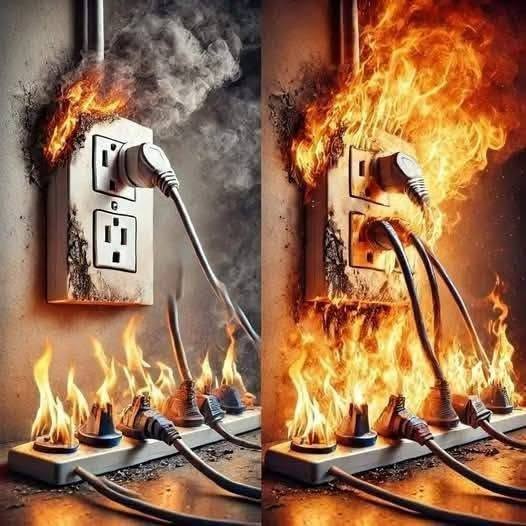
This practice (often called “daisy chaining”) can overload wiring and increase fire risk.
6. Wet or Water-Damaged Electronics
Never plug in devices that are:
- Wet
- Recently exposed to water
- Sitting in a damp area
until they are properly checked and dried.
7. Cheap or Damaged Chargers
Low-quality chargers may lack proper safety protections and can overheat.
8. Appliances That Don’t Match the Outlet Voltage
Using the wrong voltage can damage the device and create a safety hazard. Check the appliance label before plugging it in.
9. Unattended High-Heat Appliances
Avoid leaving devices like:
- Irons
- Hair tools
- Portable heaters
plugged in when not in use.
Extra safety tips:
- Replace loose or sparking outlets.
- Use surge protectors for sensitive electronics.
- Keep cords away from heat sources and carpets.
- If an outlet smells burnt, feels hot, or sparks, stop using it and have it inspected.