Most Hip Arthritis Medication Treats the Signal, Not the Cause — But a Doctor Says 3 Vitamins May Reach What Most Painkillers Never Do
This headline is designed to grab attention, but it oversimplifies how hip arthritis works. The claim that “most medications only treat the signal, not the cause” is only partly true, and the suggestion that three vitamins can address the underlying cause is not supported by strong scientific evidence.
Hip arthritis, most commonly osteoarthritis, is a complex condition involving the gradual breakdown of cartilage, changes in the surrounding bone, inflammation, and muscle weakness. Pain relievers help manage symptoms, but no vitamin has been proven to reverse or cure hip arthritis.
Let’s examine the facts.
🦴 What Is Hip Arthritis?
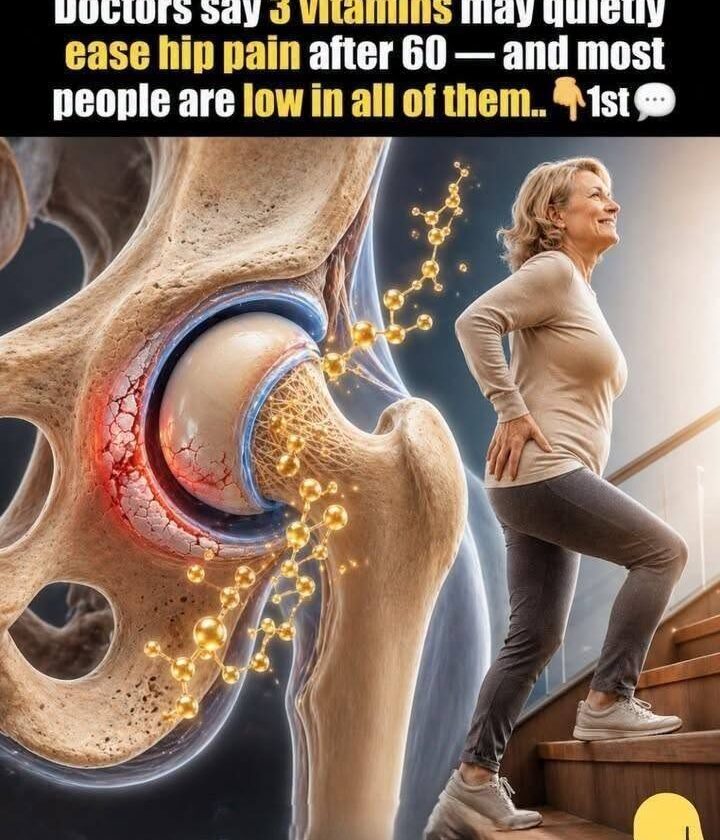
Hip arthritis occurs when the smooth cartilage that cushions the hip joint gradually wears away. As the cartilage becomes thinner, the bones rub against each other, leading to pain, stiffness, and reduced movement.
The hip is a ball-and-socket joint designed to move smoothly. Healthy cartilage acts like a shock absorber, allowing pain-free movement. When that cartilage deteriorates, the joint becomes inflamed and less flexible.
🔍 Common Symptoms
People with hip arthritis may experience:
- Pain in the groin, thigh, buttock, or outer hip
- Morning stiffness that improves with movement
- Pain after walking or standing for long periods
- Difficulty climbing stairs
- Reduced range of motion
- Clicking or grinding sensations in the joint
- Trouble putting on shoes or socks
- Limping as the condition progresses
Symptoms usually develop gradually over months or years.
🧠 Do Painkillers Only “Mask the Pain”?
Pain medications do primarily treat symptoms, not the structural damage in the joint.
For example:
Acetaminophen
May reduce pain but does not repair cartilage.
Nonsteroidal Anti-inflammatory Drugs (NSAIDs)
Examples include ibuprofen and naproxen.
These medicines:
- Reduce inflammation
- Relieve pain
- Improve mobility
However, they do not rebuild cartilage or stop osteoarthritis from progressing.
This doesn’t mean they’re ineffective—they can significantly improve quality of life when used appropriately.
🌿 Can Vitamins Reach “The Cause”?
No vitamin has been proven to regenerate worn cartilage or cure osteoarthritis.
However, certain vitamins and nutrients may support overall bone, muscle, and joint health, particularly if a person is deficient.
Let’s look at the three vitamins most commonly mentioned.
1. Vitamin D
Vitamin D helps the body absorb calcium and maintain healthy bones.
Low vitamin D levels have been linked to:
- Reduced bone strength
- Muscle weakness
- Increased risk of falls
- Bone pain
If someone has a vitamin D deficiency, correcting it may improve muscle function and overall bone health. However, studies have not consistently shown that vitamin D supplements slow the progression of hip osteoarthritis in people with normal vitamin D levels.
Good sources
- Sunlight exposure
- Fatty fish (such as salmon and sardines)
- Fortified dairy products
- Egg yolks
2. Vitamin C
Vitamin C is needed to produce collagen, an important protein found in cartilage, tendons, and ligaments.
It also acts as an antioxidant, helping protect cells from damage.
Foods rich in vitamin C include:
- Oranges
- Strawberries
- Kiwi
- Bell peppers
- Broccoli
Although vitamin C supports normal tissue health, there is no convincing evidence that taking large doses reverses existing hip arthritis.
3. Vitamin K
Vitamin K plays an important role in bone metabolism.
Some research suggests that low vitamin K levels may be associated with an increased risk of osteoarthritis progression, but evidence is still limited.
Good food sources include:
- Spinach
- Kale
- Collard greens
- Brussels sprouts
Anyone taking blood-thinning medication should consult their healthcare provider before making major changes to vitamin K intake.
🥗 Other Nutrients Often Discussed
Omega-3 Fatty Acids
Found in:
- Salmon
- Mackerel
- Sardines
- Walnuts
- Flaxseed
Omega-3s have anti-inflammatory properties and may help reduce pain in some inflammatory joint conditions. Their benefit in osteoarthritis is less certain but may contribute to overall health.
Calcium
Calcium supports strong bones but does not repair cartilage.
Good sources include:
- Milk
- Yogurt
- Cheese
- Fortified plant-based milks
- Tofu made with calcium
Protein
Adequate protein helps maintain muscle strength, which supports and stabilizes the hip joint.
Good protein sources include:
- Lean poultry
- Fish
- Eggs
- Beans
- Lentils
- Greek yogurt
🏃 What Actually Helps Hip Arthritis?
The most effective treatments usually involve a combination of approaches.
Regular Exercise
Low-impact activities such as:
- Walking
- Swimming
- Cycling
- Water aerobics
help keep the joint moving and strengthen the muscles around the hip.
Strength Training
Building the muscles of the hips, thighs, and core reduces stress on the joint and improves balance.
Weight Management
Even modest weight loss can reduce pressure on weight-bearing joints, helping relieve pain and improve function.
Physical Therapy
A physical therapist can teach exercises that:
- Improve flexibility
- Increase strength
- Enhance balance
- Reduce pain during daily activities
Assistive Devices
Using a cane or walker when appropriate can improve stability and reduce strain on the hip.
Medications
Pain relievers and anti-inflammatory medications remain valuable tools for managing symptoms, especially during flare-ups. They are often used alongside exercise and lifestyle changes rather than as the only treatment.
Surgery
When arthritis becomes severe and significantly limits daily life, hip replacement surgery may be considered. Modern hip replacements are highly successful for many people with advanced disease.
🚨 When Should You See a Doctor?
You should seek medical evaluation if:
- Hip pain persists for several weeks.
- Pain interferes with walking or sleeping.
- The joint becomes swollen, red, or warm.
- You cannot bear weight on the leg.
- Pain begins suddenly after an injury.
- Over-the-counter pain relievers no longer provide relief.
Early diagnosis allows for better management and helps rule out other conditions that can cause hip pain.
❌ Common Myths
Myth: Vitamins can rebuild worn-out cartilage.
Fact: No vitamin has been shown to regenerate cartilage lost from osteoarthritis.
Myth: Pain medication is useless because it doesn’t cure arthritis.
Fact: While pain relievers don’t reverse joint damage, they can reduce pain, improve mobility, and help people stay active—an important part of managing arthritis.
Myth: Exercise makes hip arthritis worse.
Fact: Appropriate, low-impact exercise is one of the most effective non-drug treatments for osteoarthritis.
📌 Key Takeaway
The claim that three vitamins can reach what painkillers never do is an exaggeration. Vitamins such as vitamin D, vitamin C, and vitamin K are important for overall bone and joint health, especially if you have a deficiency, but they do not cure hip arthritis or rebuild damaged cartilage.
The best approach to managing hip arthritis combines regular exercise, muscle strengthening, maintaining a healthy weight, good nutrition, appropriate medications when needed, and guidance from a healthcare professional. For people with severe arthritis, additional treatments—including physical therapy, injections, or hip replacement surgery—may offer significant relief and improved quality of life.