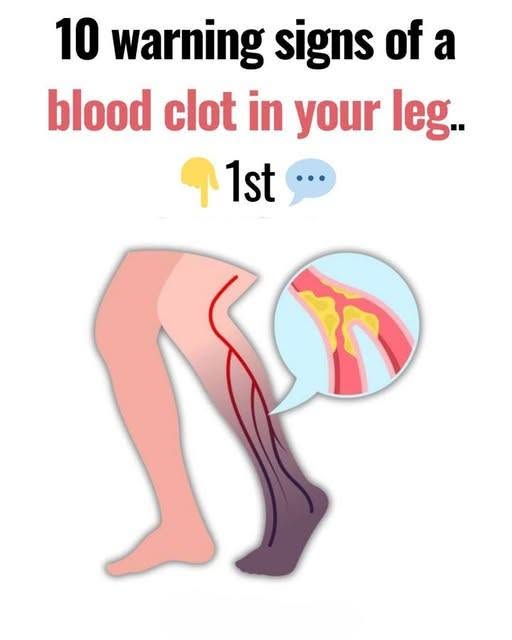
A blood clot in a deep vein of the leg, called Deep vein thrombosis (DVT), can be serious because it can break loose and travel to the lungs, causing a Pulmonary embolism. Recognizing the warning signs can help you seek prompt medical care.
1. Swelling in One Leg
One of the most common signs is swelling in one leg, especially in the calf or thigh. The swelling may develop suddenly or gradually and usually affects only one side.
2. Pain or Tenderness
The pain often starts in the calf and may feel like:
- A cramp
- Soreness
- Tightness
- Persistent aching
It may become worse when standing or walking.
3. Warm Skin
The affected area may feel noticeably warmer than the surrounding skin due to inflammation around the clot.
4. Red or Discolored Skin
The skin over the clot may appear:
- Red
- Reddish-purple
- Bluish (less commonly)
The discoloration is often limited to one area of the leg.
5. Enlarged Surface Veins
Veins near the skin may become more visible or swollen because blood is being redirected around the blocked vein.
6. A Feeling of Tightness or Fullness
Some people describe the affected leg as feeling unusually tight, heavy, or full, even without severe pain.
7. Pain When Flexing the Foot
Some people notice increased calf discomfort when flexing the foot upward. However, this sign alone is not a reliable way to diagnose DVT and should not be used by itself.
8. Leg Heaviness
The affected leg may feel unusually heavy or difficult to move, especially after sitting or standing for long periods.
9. Symptoms After Long Periods of Inactivity
A clot is more likely to develop after:
- Long flights or car rides
- Prolonged bed rest
- Major surgery
- Serious illness
If leg symptoms appear after one of these situations, they deserve prompt medical attention.
10. Sudden Shortness of Breath or Chest Pain (Emergency)
If part of a clot travels to the lungs, symptoms can include:
- Sudden shortness of breath
- Sharp chest pain, especially when breathing deeply
- Coughing, sometimes with blood
- Rapid heartbeat
- Feeling faint or collapsing
These symptoms may indicate a pulmonary embolism, which is a medical emergency. Call your local emergency services immediately.
Risk Factors
Your risk of DVT is higher if you:
- Are over age 60
- Have recently had surgery or a major injury
- Are immobile for long periods
- Have obesity
- Smoke
- Are pregnant or recently gave birth
- Use estrogen-containing medications
- Have cancer or a history of blood clots
- Have an inherited clotting disorder
When to Seek Medical Care
Seek urgent medical evaluation if you develop new swelling, pain, warmth, or redness in one leg, especially if you have risk factors for blood clots. If you experience shortness of breath, chest pain, or coughing up blood, treat it as an emergency, as these symptoms may indicate a pulmonary embolism. Early diagnosis and treatment greatly reduce the risk of serious complications.