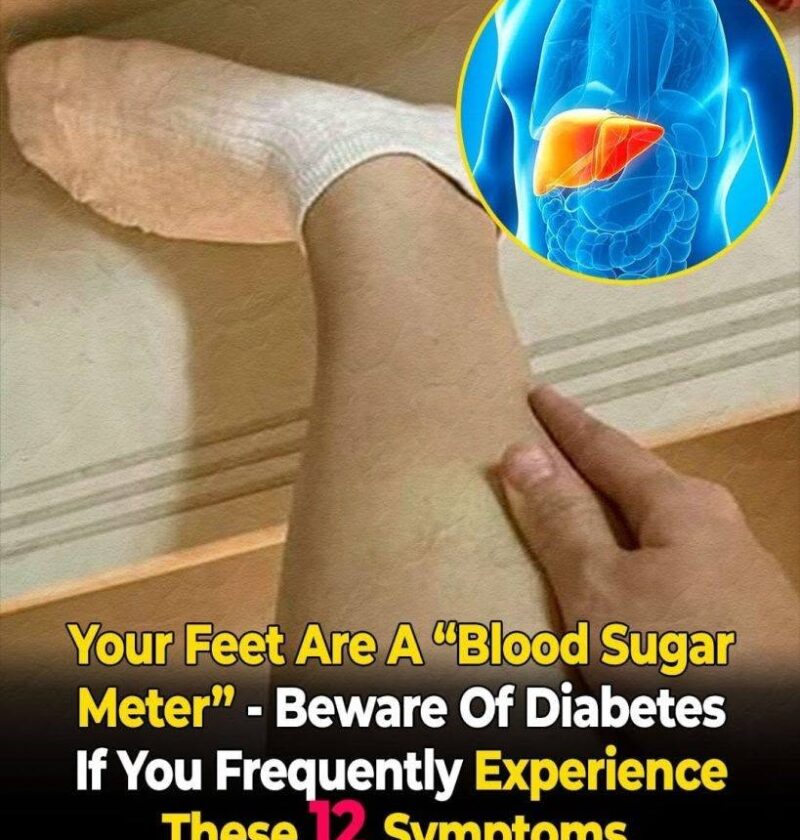
Your Feet Can Show Warning Signs of Diabetes: 12 Symptoms to Pay Attention To 🦶
Your feet can sometimes reveal changes linked with Diabetes mellitus, especially when blood sugar has been high for a long time. However, feet symptoms do not diagnose diabetes by themselves—a blood test is needed.
High blood sugar can affect nerves and blood vessels, leading to foot problems.
12 Foot-Related Signs That May Be Linked With Diabetes
1. Tingling or “Pins and Needles”
You may feel:
- Tingling
- Burning
- Prickling sensations
This can happen when nerves are affected.
2. Numbness in the Feet
Some people notice reduced feeling, especially in:
- Toes
- Soles
- Both feet
Reduced sensation can make injuries harder to notice.
3. Burning Foot Pain (Especially at Night)
A burning or sharp pain may be related to nerve irritation.
4. Slow-Healing Cuts or Sores
High blood sugar can affect circulation and the body’s ability to heal.
5. Dry, Cracked Skin
Nerve changes can affect sweating, leading to dry skin that may crack.
6. Frequent Foot Infections
People with poorly controlled diabetes may be more prone to infections.
7. Changes in Foot Color or Temperature
Watch for:
- Unusual redness
- Pale or bluish color
- One foot feeling colder than the other
8. Swelling in the Feet or Ankles
Swelling can have many causes, but persistent swelling should be checked.
9. Loss of Balance
Reduced sensation in the feet can affect stability and walking.
10. Changes in Toenails
Possible signs include:
- Thickened nails
- Discoloration
- Increased fungal problems
11. Foot Pain Without an Obvious Injury
Persistent pain, especially with numbness or tingling, deserves attention.
12. Calluses or Pressure Areas That Keep Returning
Repeated pressure spots can become risky if sensation is reduced.
Other Common Diabetes Symptoms to Watch For
Diabetes may also cause:
- Increased thirst
- Frequent urination
- Unusual tiredness
- Blurry vision
- Increased hunger
- Unexplained weight changes
Foot Care Tips for People at Risk
✅ Check feet daily
✅ Keep skin moisturized (avoid putting lotion between toes)
✅ Wear comfortable shoes
✅ Keep toenails trimmed safely
✅ Avoid walking barefoot if you have reduced sensation
When to Seek Medical Advice Quickly
Get medical help if you have:
- A foot wound that is not healing
- Blackened skin
- Spreading redness or warmth
- Fever with a foot infection
- Sudden severe swelling or pain
The best way to know if diabetes is present is through testing such as blood glucose or HbA1c, not by foot symptoms alone.