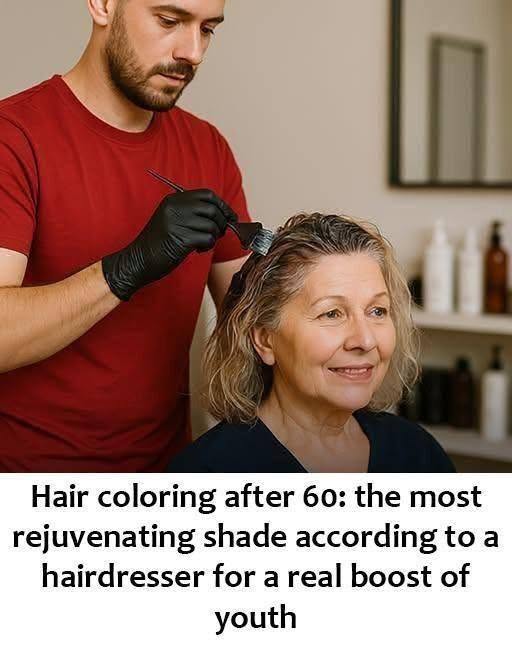
What Hair Color Should You Choose After 60 for a Youthful Look? A Hairdresser Shares His Advice
Introduction
Choosing a hair color after 60 is not about trying to look younger by hiding every sign of aging. The most flattering color is usually the one that complements your skin tone, enhances your features, and makes your hair look healthy and vibrant.
Hair naturally changes with age: it may become grayer, finer, drier, or less shiny. The right color can add warmth, brightness, and dimension, while the wrong shade may make the complexion appear dull or emphasize shadows and lines.
Professional hairdressers often recommend focusing on softness, dimension, and natural-looking tones rather than harsh, flat colors.
1. Choose a Color That Matches Your Skin Undertone
Before selecting a shade, determine whether your skin has a warm, cool, or neutral undertone.
Warm Undertones
Signs:
- Skin looks golden or peachy.
- Gold jewelry tends to look flattering.
- Veins may appear greenish.
Flattering hair colors:
- Honey blonde
- Caramel
- Golden brown
- Warm chestnut
- Soft copper
These shades can add warmth and brightness to the face.
Cool Undertones
Signs:
- Skin has pink, rosy, or bluish tones.
- Silver jewelry may look especially flattering.
- Veins may appear blue or purple.
Flattering colors:
- Ash blonde
- Cool beige blonde
- Silver gray
- Mushroom brown
- Soft espresso
These shades can harmonize naturally with cooler complexions.
Neutral Undertones
People with neutral undertones can often wear a wider range of shades, including:
- Beige blonde
- Soft brown
- Bronde (brown + blonde)
- Natural gray blends
2. Soft Blending Is Often More Youthful Than a Single Dark Color
Many hairdressers advise avoiding very dark, one-dimensional colors after 60.
A solid black or very dark brown shade can sometimes:
- Create a harsh contrast with lighter skin.
- Make facial shadows more noticeable.
- Require frequent root touch-ups.
Instead, consider:
- Highlights
- Lowlights
- Balayage
- Subtle color blending
These techniques create movement and a more natural appearance.
3. Consider These Youthful-Looking Hair Color Options
1. Silver Gray and Natural Gray Blending
Gray hair can look elegant and modern when maintained properly.
Benefits:
- Low maintenance
- Works beautifully with many skin tones
- Creates a sophisticated appearance
A stylist may enhance natural gray with:
- Silver tones
- Pearl tones
- Cool beige shades
2. Soft Blonde
Blonde can brighten the face, especially when it is not overly yellow or too pale.
Flattering choices:
- Champagne blonde
- Beige blonde
- Honey blonde
- Sandy blonde
Avoid very harsh platinum shades unless they complement your complexion and style.
3. Bronde (Brown + Blonde)
A popular choice because it sits between blonde and brown.
Benefits:
- Adds warmth
- Looks natural
- Requires less maintenance than all-over blonde
- Adds dimension to mature hair
4. Warm Chocolate Brown
A softer alternative to very dark brown.
Good options:
- Milk chocolate
- Chestnut
- Mocha
- Light espresso
Adding subtle highlights can prevent the color from looking flat.
5. Soft Copper or Auburn
For those who like warmer tones:
- Light copper
- Strawberry blonde
- Soft auburn
can add vibrancy and personality.
These shades work especially well with warm or neutral skin tones.
4. Avoid Colors That May Age the Appearance
Some shades may be less flattering for certain people:
Very Dark Black
May create a severe contrast and emphasize facial shadows.
Extremely Yellow Blonde
Can make hair look artificial and may clash with skin tone.
Flat, Single-Process Color
A single solid shade can sometimes lack the dimension that makes hair look healthy.
Very Bright Fashion Colors
Bold colors can be beautiful at any age, but they require confidence and maintenance. The key is choosing a shade that fits your personality and lifestyle.
5. Add Dimension Instead of Just Changing Color
Many professional colorists focus less on the exact shade and more on creating depth.
Techniques include:
Highlights
Lighter strands add brightness and movement.
Lowlights
Darker pieces create depth and make hair appear fuller.
Balayage
A hand-painted technique that creates a softer, blended look.
Face-Framing Highlights
Light pieces around the face can brighten the complexion.
6. Consider Hair Texture and Condition
Hair color should also take your hair health into account.
After 60, many people experience:
- More dryness
- Reduced natural oils
- Increased sensitivity
- Finer strands
Helpful habits:
- Use moisturizing shampoos and conditioners.
- Avoid excessive bleaching.
- Use heat protection before styling.
- Schedule regular trims.
- Consider gloss treatments for shine.
Healthy-looking hair often appears more youthful than any particular color.
7. Match Your Hair Color to Your Lifestyle
Ask yourself:
How often do you want salon visits?
Low-maintenance options:
- Gray blending
- Balayage
- Root-smudging techniques
Higher-maintenance options:
- Dark color over gray roots
- Platinum blonde
- Frequent dramatic changes
How much styling do you do?
If you wear simple hairstyles, a dimensional color can add interest without much effort.
8. If You Are Transitioning to Gray
Growing out gray hair can be done gradually.
Options include:
- Gray blending highlights
- Shorter haircut during transition
- Toners to soften contrast
- Gradually reducing permanent color
A skilled colorist can create a transition plan based on your current shade.
Hairdresser Tips for a More Youthful Appearance
Many stylists recommend:
✔ Add Shine
Glossy hair often appears healthier.
✔ Avoid Overly Harsh Contrast
Soft transitions tend to look more natural.
✔ Keep the Color Fresh
Faded color can make hair look dull.
✔ Choose Confidence Over Trends
The most flattering hair color is one that makes you feel comfortable and reflects your personality.
Frequently Asked Questions
Is gray hair aging?
Not necessarily. Well-maintained silver or gray hair can look elegant, modern, and sophisticated.
Should older women always go lighter?
No. Some people look beautiful with rich brunette, auburn, or darker shades. The best choice depends on skin tone, features, and personal style.
Does lighter hair always make someone look younger?
Not always. A poorly matched blonde can wash out the complexion, while the right brunette or gray blend may look more flattering.
How often should mature hair be colored?
It depends on the technique. Permanent color may need touch-ups every 4–8 weeks, while blended techniques may last longer.
Summary
After 60, the most youthful-looking hair color is usually one that creates softness, brightness, and natural dimension. Popular flattering choices include silver blends, beige or honey blondes, bronde, soft chocolate browns, and gentle auburn tones. The best color is not about following a rule—it is about choosing a shade that complements your skin tone, enhances your features, and keeps your hair looking healthy and vibrant.