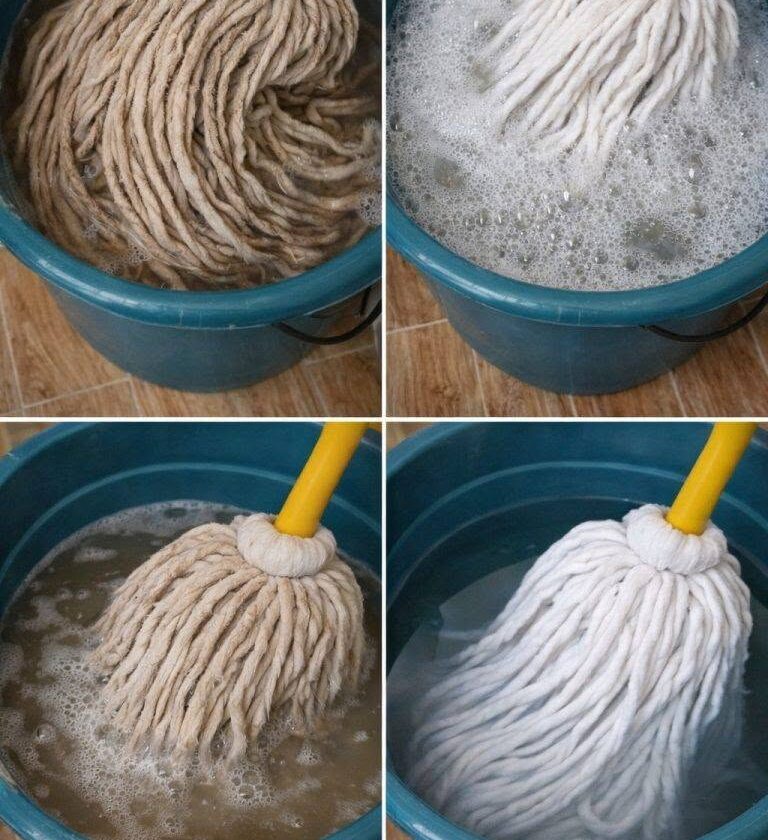
Very Dirty Mop? Don’t Throw It Away — One Simple Ingredient Can Help Clean It Again 🧹✨
A mop can become extremely dirty over time because it collects:
- Dust
- Grease
- Food residue
- Soap buildup
- Bacteria
- Bad odors
Simply rinsing it with water often does not remove the trapped dirt. The good news is that you can refresh a dirty mop using common household ingredients instead of replacing it.
One of the most popular cleaning tricks uses white vinegar.
Method: Deep Clean a Dirty Mop With Vinegar 🧴
What You Need
- 1 bucket of hot water
- 1 cup white vinegar
- A few drops of dish soap (optional)
- Baking soda (optional for extra odor removal)
Step-by-Step Instructions
1. Remove Loose Dirt First
Before deep cleaning:
- Rinse the mop under running water.
- Squeeze out excess water.
- Remove visible hair, dust, and debris.
This allows the cleaning solution to work better.
2. Prepare the Cleaning Solution
Fill a bucket with:
- Hot water
- 1 cup white vinegar
Add a small amount of dish soap if the mop has greasy buildup.
3. Soak the Mop
Place the mop head into the bucket.
Let it soak:
- 30 minutes for normal dirt
- 1–2 hours for very dirty mops
The vinegar helps loosen mineral deposits, odors, and residue.
4. Scrub and Rinse
After soaking:
- Rub the mop fibers together.
- Rinse thoroughly with clean water.
- Squeeze out excess moisture.
The water should run much clearer.
5. Dry Properly
This step is very important.
Do not leave a wet mop sitting in a bucket.
Instead:
- Hang it in a ventilated area.
- Allow it to dry completely.
- Store it upright.
A damp mop can develop a bad smell and allow bacteria to grow.
For a Smelly Mop: Baking Soda Method 🧂
If the mop has a strong odor:
Mix:
- Warm water
- ½ cup baking soda
Soak for 30–60 minutes, then rinse well.
Baking soda helps absorb odors and loosen grime.
For a Disinfecting Boost (Use Carefully)
If you need stronger sanitizing:
You can use a diluted bleach solution according to the bleach label instructions.
Important:
⚠️ Never mix bleach with vinegar or other cleaners. This can create dangerous chlorine gas.
Use bleach only separately, with good ventilation.
How Often Should You Clean a Mop?
A good routine:
- After every use: rinse thoroughly and dry
- Weekly: deep clean if used often
- Replace mop heads when fibers become worn, permanently stained, or develop odors that won’t go away
Tips to Keep Your Mop Cleaner Longer
✅ Do not mop floors with only dirty water
✅ Change mop water frequently
✅ Rinse after every cleaning session
✅ Let the mop dry fully
✅ Avoid storing it wet in a closed bucket
Final Thought
A dirty mop does not always need to be thrown away. A deep soak with white vinegar and hot water can remove buildup, reduce odors, and help restore the mop’s cleaning ability. The biggest secret is not just cleaning the mop—it is drying it properly after every use so dirt and bacteria do not build up again.