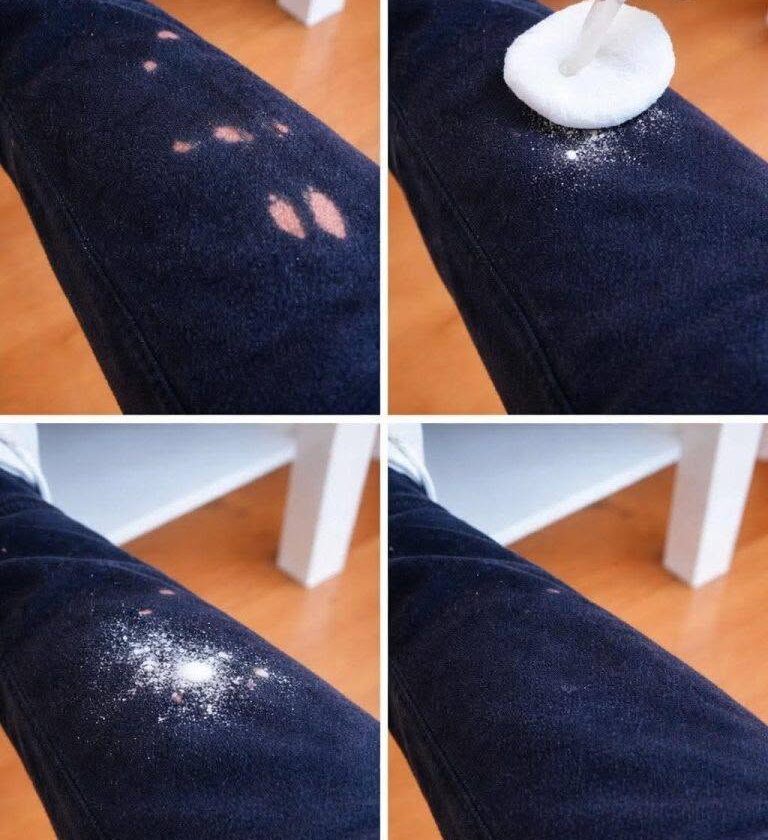
That headline is misleading, but it’s a good question because bleach stains confuse a lot of people.
Let’s go in detail and clear up what’s really happening—and what you can actually do.
🧼 First Truth: Are Bleach Stains Permanent?
Yes—true bleach stains are permanent in terms of color loss.
Bleach doesn’t “stain” fabric like dirt or ink. Instead, it:
- Breaks down dye molecules in the fabric
- Removes color chemically
- Leaves a lighter or white patch permanently
So what looks like a stain is actually color that has been destroyed, not something sitting on top of the fabric.
👉 That’s why most “instant fixes” you see online are exaggerated.
⚠️ Why “Quick Fix in Minutes” Claims Exist
When people say they “fixed bleach stains,” they usually mean one of these:
- They covered the stain (not removed it)
- They darkened it temporarily
- They blended it so it’s less noticeable
- Or they were dealing with a non-bleach stain mistaken for bleach damage
So the “trick” is usually camouflage, not repair.
🧠 Real Ways to Fix or Hide Bleach Stains (Honest Solutions)
Now let’s look at what actually works in real life.
🎨 1. Fabric Dye (BEST REAL FIX)
Fabric dye is the most effective solution.
How it works:
- Re-colors the entire garment or affected area
- Restores uniform appearance
Options:
- Full garment dyeing (best result)
- Spot dyeing (for small areas, harder to match perfectly)
Pros:
- Long-lasting
- Looks natural if done properly
Cons:
- Requires effort
- Color matching can be tricky
🖊️ 2. Fabric Markers (Fast Cover-Up)
How it works:
- Colored ink is applied directly to bleached spot
Best for:
- Small dots or light stains
- Black or dark clothing
Pros:
- Cheap
- Quick
- Easy
Cons:
- May fade over time
- Can look uneven if not blended well
🧵 3. Creative Covering (Smart Fix)
Instead of hiding the stain, you redesign the clothing:
- Add patches
- Embroidery
- Printed designs
- Logos or patterns
👉 Many people turn “ruined clothes” into custom fashion pieces.
🧺 4. Re-Dye Entire Clothing Piece
Best when:
- Large bleach area
- Multiple spots
- Uniform clothing like jeans or shirts
Why this works:
- Everything becomes one color again
- No visible patch differences
🧪 5. Temporary “Blending Tricks” (Not True Fixes)
Some viral “quick tricks” include:
- Vinegar
- Baking soda
- Lemon juice
- Coffee or tea rubbing
👉 Reality:
These do NOT restore color. At best, they:
- Slightly darken surrounding fabric
- Make contrast less obvious temporarily
❌ What DOES NOT Work (Common Myths)
Let’s be clear:
- ❌ Bleach neutralizing sprays restore color → NO
- ❌ Washing removes bleach damage → NO
- ❌ Home chemicals reverse bleaching → NO
- ❌ “Magic 5-minute fixes” → misleading
Bleach damage is not reversible chemically.
🧠 Simple Way to Understand It
Think of fabric like a painted wall:
- Stain = something stuck on the wall → can be cleaned
- Bleach = paint removed from the wall → cannot be “washed back on”
📌 Key Takeaway
- Bleach stains are actually permanent color loss
- No trick can truly restore original fabric color in minutes
- Real solutions are:
- Fabric dye
- Markers
- Patching or redesign
👍 Final Honest Advice
Instead of chasing “instant fixes,” the best approach is:
- Treat bleach damage as a color restoration project, not a cleaning problem
If you want, I can also show you:
- how to fix bleach stains on black clothes specifically
- or how to prevent bleach stains in the future
- or DIY ways to turn stained clothes into stylish designs