Keep a Glass of Salt in Your Car? The Truth Behind This Popular Driver Tip
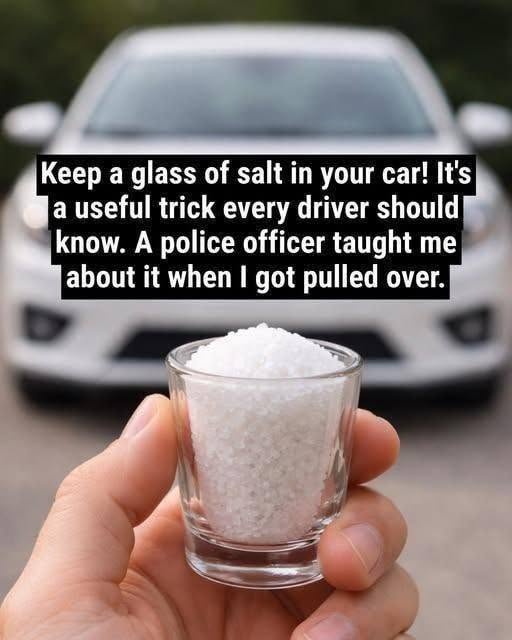
You may have seen the viral tip: “Keep a glass of salt in your car — a police officer taught me this trick.” These kinds of car hacks spread quickly online, but the actual usefulness of keeping a glass of salt in a vehicle depends on what it is supposed to do.
A simple glass or container of salt does not have any proven ability to prevent accidents, improve driving safety, detect danger, or solve vehicle problems. However, salt can have a few practical uses for drivers when stored and handled properly.
1. Emergency Traction Aid (Limited Use)
One of the most common reasons people carry salt in their car is for slippery conditions.
How It May Help
Salt lowers the freezing point of water and is used on roads to help melt ice. A small amount sprinkled near a stuck tire may help slightly by:
- Reducing a thin layer of ice
- Providing some extra texture under a tire
Important Limitations
A small container of household salt is not a replacement for:
- Winter tires
- Tire chains
- Sand or traction mats
- Proper winter driving techniques
For getting unstuck, materials with more grip, such as sand, kitty litter, or commercial traction products, are often more effective.
2. Removing Moisture and Odors (Possible Benefit)
Salt is sometimes used as a moisture absorber because it can attract water.
A small container of salt may help slightly with:
- Minor dampness
- Some odors
However, dedicated moisture absorbers containing materials such as calcium chloride generally work much better for preventing condensation inside vehicles.
3. Cleaning Spills
Salt can be useful in certain cleaning situations.
For example:
- Absorbing a small liquid spill before wiping
- Helping loosen some residue when combined with other cleaning methods
Always clean spills properly afterward, especially inside a vehicle where moisture can lead to mold or unpleasant smells.
4. Emergency Cooking or Survival Myths
Some online posts suggest keeping salt because it is a “survival essential.”
Salt is important for the human body, but carrying a glass of salt in your car is not a substitute for a proper emergency kit.
A better vehicle emergency kit includes:
- Drinking water
- Flashlight
- First-aid supplies
- Phone charger/power bank
- Blanket
- Reflective warning triangle
- Basic tools
- Tire repair equipment appropriate for your vehicle
Why Did the Police Officer Mention It?
It is possible the advice was connected to a specific situation, such as:
- Winter driving
- Roadside emergencies
- Local weather conditions
- A personal trick rather than an official recommendation
Police officers often share practical driving advice, but not every roadside tip is a scientifically proven safety method.
Better Things Every Driver Should Keep in the Car
Safety Essentials
✅ First-aid kit
✅ Flashlight
✅ Reflective vest or warning triangle
✅ Phone charging cable or power bank
✅ Water bottle
✅ Blanket or warm clothing
✅ Jumper cables or approved battery booster
✅ Tire pressure gauge
✅ Spare tire tools (if equipped)
Seasonal Items
Winter
- Ice scraper
- Gloves
- Blanket
- Traction aid (sand, kitty litter, or traction mats)
Hot Weather
- Extra water
- Sunshade
- Tire pressure checks (heat affects tire pressure)
Important Car Safety Reminders
A few habits are far more valuable than carrying a jar of salt:
- Check tire pressure regularly.
- Maintain proper oil and fluid levels.
- Replace worn tires.
- Keep your windshield clean.
- Avoid distracted driving.
- Wear your seat belt every trip.
- Follow speed limits and road conditions.
Summary
Keeping salt in your car is not a magic driving trick, and there is no evidence that a glass of salt provides special protection or prevents problems. Salt may have limited uses for minor moisture control, small spills, or icy situations, but a proper emergency kit and good vehicle maintenance are much more valuable for driver safety. If you do carry salt, store it in a sealed container rather than an open glass to prevent spills and moisture damage.