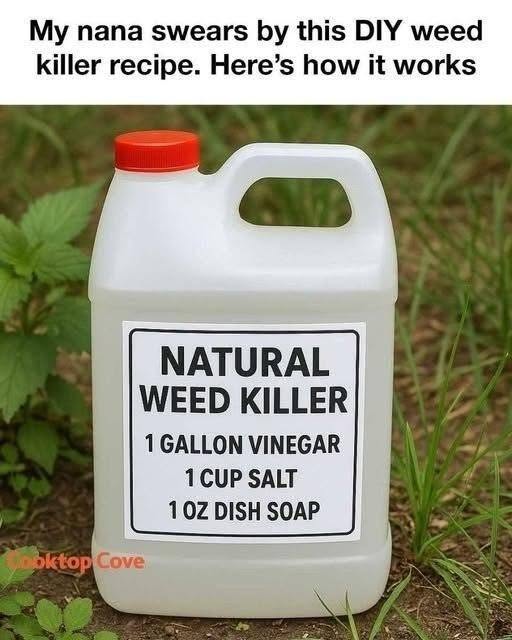
My Nana Swears by This DIY Weed Killer Recipe: Here’s How It Works 🌿🧴
Weeds can quickly take over driveways, patios, sidewalks, and garden paths. While commercial weed killers can be effective, many people prefer simple homemade alternatives for treating weeds in non-garden areas.
One of the most popular DIY weed killer recipes combines white vinegar, dish soap, and salt. This mixture can help dry out weeds, but it’s important to understand its limitations and use it carefully.
Important: Homemade weed killers are non-selective, meaning they can damage or kill any plant they touch, including flowers, vegetables, and grass. They should be used only where you do not want any plants to grow.
How This DIY Weed Killer Works
White Vinegar
The acetic acid in household white vinegar helps dry out the leaves of young weeds.
It works best on:
- Small annual weeds
- Newly sprouted weeds
- Weeds growing in cracks of sidewalks or driveways
Vinegar is generally less effective on large, well-established weeds with deep root systems.
Dish Soap
Dish soap acts as a surfactant, helping the vinegar stick to the leaves instead of beading up and rolling off.
Only a small amount is needed.
Salt (Use Sparingly)
Salt can help dry out plants, but it also remains in the soil and may prevent future plant growth.
For this reason, avoid using salt:
- In vegetable gardens
- Around flower beds
- Near trees or shrubs
- Anywhere you plan to grow plants later
Many gardeners choose to leave salt out of the recipe altogether to reduce the risk of long-term soil damage.
DIY Weed Killer Recipe
Ingredients
- 1 gallon (3.8 liters) white vinegar (5% acidity)
- 1 tablespoon liquid dish soap
- Optional: 1 cup table salt (only for areas where no future plant growth is desired)
Instructions
Step 1
Pour the vinegar into a large container or garden sprayer.
Step 2
Add the dish soap.
Stir gently to avoid creating excessive foam.
Step 3 (Optional)
If using salt, stir until it dissolves completely.
Step 4
Transfer the mixture to a clean spray bottle or garden sprayer.
How to Apply
For the best results:
- Spray directly onto the weed’s leaves.
- Coat the foliage thoroughly.
- Choose a warm, sunny, dry day.
- Avoid spraying before rain, as rainfall can wash the solution away before it works.
Young weeds usually respond better than mature ones.
Where This Recipe Works Best
This homemade spray is best for:
✅ Sidewalk cracks
✅ Driveways
✅ Gravel paths
✅ Patio joints
✅ Fence lines
Avoid spraying near desirable plants, as overspray can damage them.
What This Recipe Won’t Do
Many online articles claim homemade weed killers permanently eliminate weeds.
In reality:
- Vinegar usually kills or damages the visible growth.
- Deep-rooted perennial weeds may regrow because the roots survive.
- Repeat applications or manual removal may still be needed.
Other Natural Weed Control Methods
Hand Pulling
Removing weeds after rain, when the soil is moist, often makes it easier to remove the roots.
Mulching
A 2–4 inch layer of mulch helps:
- Block sunlight
- Reduce weed germination
- Retain soil moisture
Popular mulches include:
- Wood chips
- Straw
- Bark
- Shredded leaves
Boiling Water
Pouring carefully applied boiling water onto weeds growing in pavement cracks can kill the above-ground growth without chemicals.
Use caution to avoid burns and protect nearby desirable plants.
Common Mistakes to Avoid
❌ Spraying on windy days
The spray can drift onto flowers, vegetables, or lawn.
❌ Using too much salt
Excess salt can remain in the soil for a long time, making it difficult for plants to grow.
❌ Expecting one treatment to eliminate all weeds
Persistent weeds often require repeated treatment or physical removal.
❌ Spraying before rain
Rain may reduce the effectiveness by washing the solution away.
Frequently Asked Questions
Will vinegar kill grass?
Yes. Vinegar is non-selective, so it can damage or kill grass as well as weeds.
Can I use cleaning vinegar?
Cleaning vinegar is more concentrated than household vinegar and can be more effective on weeds, but it is also more hazardous. Wear gloves and eye protection, and avoid contact with your skin or eyes.
Is this safe for vegetable gardens?
No. Avoid spraying homemade weed killers on or near edible plants, as they can injure your crops and, if salt is used, affect soil quality.
Final Thought
This traditional DIY weed killer can be useful for small weeds in driveways, patios, and other hard surfaces. The combination of vinegar and a small amount of dish soap helps dry out unwanted plants, while salt—if used—should be reserved only for areas where you never want vegetation to grow.
For long-term weed control, combining spot treatments with regular weeding and mulching is usually the most effective and garden-friendly approach. 🌿✨