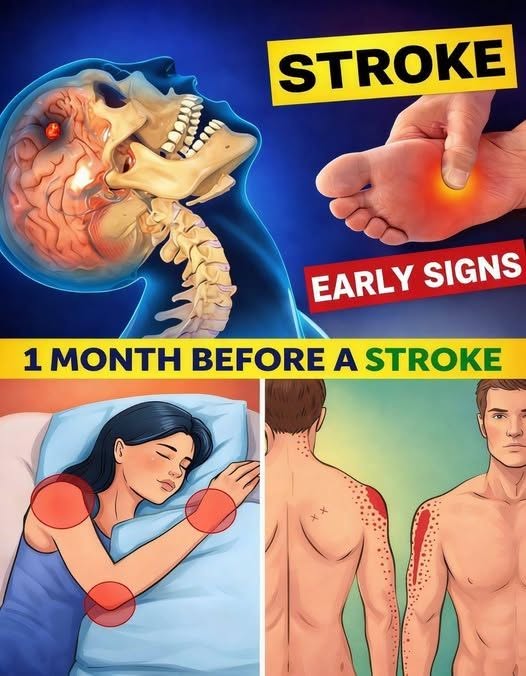
8 Warning Signs of Stroke You Should Not Ignore + 9 Prevention Tips
A Stroke usually happens suddenly, but some people may notice warning signs or health changes beforehand. There is no reliable way to predict a stroke one month before it happens, but certain symptoms and risk factors should be taken seriously.
8 Possible Warning Signs That Need Attention
1. Sudden weakness or numbness
Especially on:
- One side of the face
- One arm
- One leg
2. Trouble speaking or understanding
Signs include:
- Slurred speech
- Difficulty finding words
- Confusion during conversation
3. Sudden vision problems
Such as:
- Blurred vision
- Loss of vision in one eye
- Double vision
4. Sudden dizziness or balance problems
Especially if combined with:
- Trouble walking
- Loss of coordination
5. Severe unusual headache
A sudden, extremely painful headache—especially with other symptoms—can be a warning sign.
6. Facial drooping
One side of the face may:
- Droop
- Feel numb
- Look uneven when smiling
7. Temporary stroke-like symptoms (TIA)
A Transient ischemic attack can cause stroke symptoms that disappear. It is still a medical warning and needs evaluation.
8. Sudden confusion or behavior changes
New confusion, difficulty thinking clearly, or unusual changes should be checked.
FAST Stroke Check
- F — Face: Is one side drooping?
- A — Arms: Can both arms be raised?
- S — Speech: Is speech strange or unclear?
- T — Time: Call emergency services immediately if these appear.
9 Tips to Help Reduce Stroke Risk
- Control blood pressure
High blood pressure is one of the biggest stroke risk factors. - Stay physically active
Aim for regular walking or other moderate exercise. - Eat a heart-healthy diet
Include:
- Vegetables and fruits
- Whole grains
- Beans
- Fish
- Healthy fats
- Limit excess salt
Too much sodium can raise blood pressure. - Avoid smoking and tobacco
Smoking damages blood vessels and increases stroke risk. - Manage diabetes
Keep blood sugar levels under control if you have diabetes. - Maintain a healthy weight
Excess weight can increase strain on the heart and blood vessels. - Limit excessive alcohol
Heavy drinking can increase stroke risk. - Get regular health checks
Monitor:
- Blood pressure
- Cholesterol
- Blood sugar
- Heart health
If you or someone nearby suddenly develops stroke symptoms, do not wait to see if they improve—seek emergency medical help immediately.