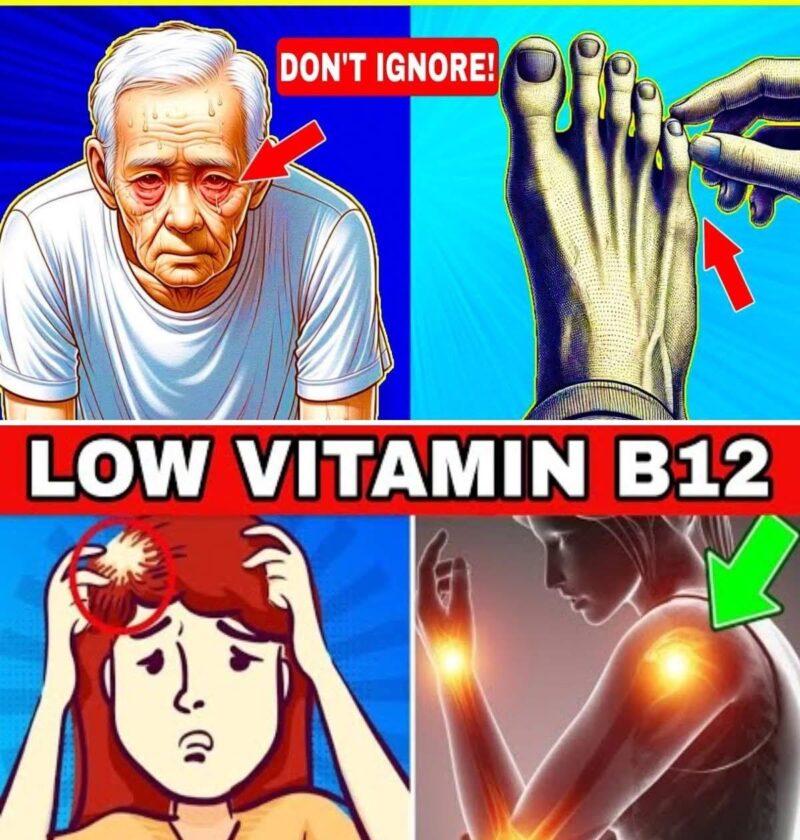
Vitamin B12 is essential for making red blood cells, supporting nerve function, and helping your body produce DNA. A deficiency can develop slowly, and early symptoms are often subtle. While these signs don’t necessarily mean you have a B12 deficiency, they are worth discussing with a healthcare professional if they persist.
1. Persistent Fatigue
Feeling unusually tired or weak despite getting enough rest may occur because low B12 can lead to fewer healthy red blood cells, reducing oxygen delivery throughout the body.
2. Numbness or Tingling
A “pins and needles” sensation in the hands or feet can occur because vitamin B12 is important for maintaining the protective covering around nerves.
3. Difficulty with Balance
People with a significant B12 deficiency may notice:
- Unsteady walking
- Poor coordination
- Increased risk of falls
4. Pale or Slightly Yellow Skin
A B12 deficiency can sometimes cause anemia, making the skin appear pale. In some cases, mild yellowing may occur due to increased breakdown of abnormal red blood cells.
5. Memory or Concentration Problems
Low B12 levels may contribute to:
- Forgetfulness
- Difficulty concentrating
- Mental “fog”
These symptoms can have many causes, so they should be evaluated rather than assumed to be due to B12.
6. A Sore, Red, Smooth Tongue
Some people develop an inflamed tongue (glossitis), which may feel sore, swollen, or unusually smooth.
7. Shortness of Breath or Heart Palpitations
If a B12 deficiency causes anemia, the heart may work harder to deliver oxygen, leading to symptoms such as:
- Shortness of breath during activity
- A rapid or pounding heartbeat
8. Mood Changes
Some people with a B12 deficiency experience:
- Irritability
- Low mood
- Changes in emotional well-being
These symptoms are nonspecific and can have many possible causes.
9. Blurred Vision (Less Common)
In rare cases, severe or prolonged B12 deficiency can affect the optic nerve, potentially causing vision changes. Prompt evaluation is important if this occurs.
Who Is at Higher Risk?
You may have a higher risk of vitamin B12 deficiency if you:
- Are over age 60
- Follow a vegan diet without B12 supplementation
- Take metformin for diabetes
- Use acid-reducing medications long-term
- Have certain digestive disorders or have had stomach or intestinal surgery
When to See a Healthcare Professional
If you have persistent symptoms such as fatigue, numbness, balance problems, or memory changes, don’t start high-dose supplements based on symptoms alone. A simple blood test can often check your vitamin B12 level and help determine whether supplementation is appropriate.
Treating a true B12 deficiency early is important because nerve damage can become permanent if the deficiency is severe and left untreated for too long.