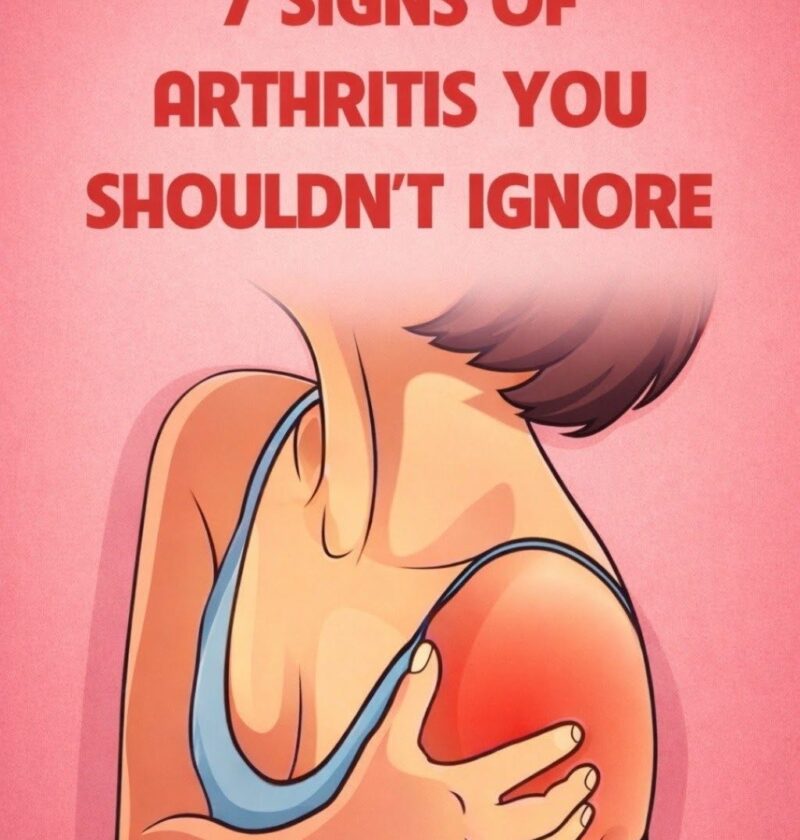
🦴 7 Signs of Arthritis You Shouldn’t Ignore
Arthritis isn’t just “normal aging joint pain.” It refers to inflammation or degeneration of joints that can worsen over time if not managed early. One common form is osteoarthritis, while another is inflammatory conditions like rheumatoid arthritis.
Catching the early warning signs matters because early treatment can slow joint damage and improve quality of life.
⚠️ 1. Persistent Joint Pain
Pain that:
- Lasts more than a few days or weeks
- Keeps returning in the same joint
- Worsens with movement or pressure
👉 This is often the first and most common sign.
🧊 2. Stiffness (Especially in the Morning)
You may notice:
- Difficulty moving after waking up
- Stiffness lasting 30 minutes or more
- Feeling “rusty” until you start moving
👉 Morning stiffness is especially common in inflammatory arthritis.
🔥 3. Swelling Around Joints
Look for:
- Puffy or enlarged joints
- Warmth around the area
- Tenderness when touched
👉 Swelling suggests inflammation inside the joint.
🧠 4. Reduced Range of Motion
You may find:
- Trouble bending or straightening joints fully
- Difficulty climbing stairs or gripping objects
- Feeling “locked” or restricted movement
👉 This happens as cartilage wears down or inflammation builds up.
⚡ 5. Joint Warmth and Redness
Inflamed joints may feel:
- Warm compared to other areas
- Red or irritated-looking
👉 This is more common in inflammatory types like rheumatoid arthritis.
🦶 6. Pain That Worsens with Activity (or Rest)
Depending on the type:
- Osteoarthritis → worse with movement
- Inflammatory arthritis → worse after rest or inactivity
👉 The pattern of pain helps doctors identify the type.
🧱 7. Joint Deformity or Changes Over Time
In more advanced cases:
- Fingers may appear bent or misaligned
- Knuckles may enlarge
- Joints may feel unstable
👉 This is a sign of long-term joint damage and should be evaluated early.
🧠 When to See a Doctor
You should seek medical advice if:
- Symptoms last more than 2–3 weeks
- Pain is getting worse over time
- Swelling is persistent
- Daily activities become difficult
- Multiple joints are affected
🩺 Why Early Diagnosis Matters
Early treatment can:
- Slow joint damage
- Reduce pain and inflammation
- Improve mobility
- Prevent long-term disability
Treatments may include medication, physical therapy, and lifestyle changes depending on the type.
✔ Final takeaway
Arthritis doesn’t appear overnight—it usually starts with small but persistent joint changes. The key warning signs are:
✔ Ongoing pain
✔ Morning stiffness
✔ Swelling
✔ Reduced movement
✔ Warm or red joints
If these symptoms are present, it’s worth getting evaluated early rather than waiting for them to worsen.
If you want, I can also explain:
- How to tell arthritis vs normal aging joint pain
- Natural ways to reduce arthritis inflammation
- Or the best foods and exercises for joint health