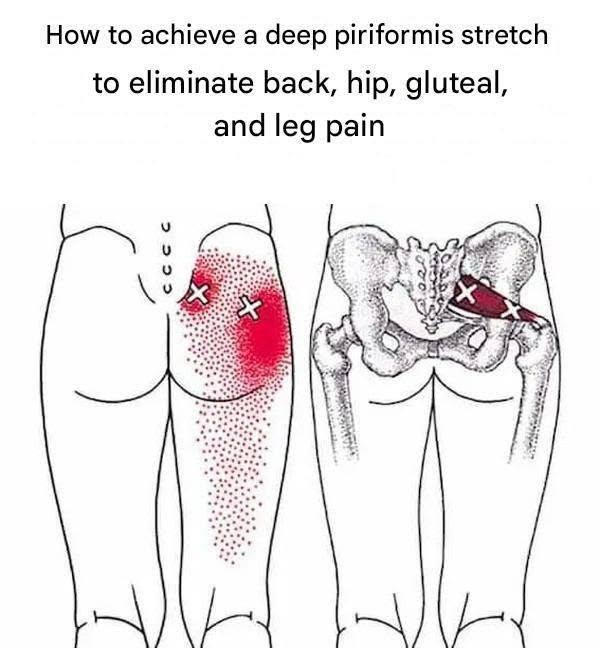
A piriformis stretch targets a small muscle deep in the buttock called the piriformis, which sits near the sciatic nerve. When it becomes tight or irritated, it can contribute to buttock pain, hip stiffness, and sometimes sciatic-like leg pain.
Piriformis muscle
Important note first: stretching can help if tightness is part of the problem, but it won’t “eliminate all back, hip, gluteal, and leg pain” in every case. Those symptoms can also come from disc issues, arthritis, nerve compression, or other conditions. So think of this as supportive relief, not a cure-all.
Safe deep piriformis stretch (lying figure-4 stretch)
This is one of the most effective and safest versions.
How to do it:
- Lie on your back on a flat surface.
- Bend both knees.
- Place your right ankle over your left knee (making a “figure 4” shape).
- Thread your hands behind your left thigh.
- Gently pull your left thigh toward your chest.
- You should feel a stretch in your right buttock (deep glute area).
- Hold for 20–40 seconds, then switch sides.
Key tips:
- Keep your neck relaxed.
- Don’t force the stretch.
- You should feel tension, not sharp pain.
Seated piriformis stretch (simple option)
- Sit on a chair.
- Place your right ankle on your left knee.
- Keep your back straight.
- Lean forward slightly until you feel a stretch in the right buttock.
- Hold 20–30 seconds.
Standing version (good for work breaks)
- Cross one ankle over the opposite knee while standing.
- Slowly squat slightly (as if sitting back).
- Keep balance with a wall if needed.
- Hold gently.
Why piriformis tightness causes pain
When the piriformis muscle becomes tight or inflamed, it may:
- Irritate the sciatic nerve
- Cause pain in the buttock
- Radiate discomfort down the leg
- Feel like “deep hip pain” or stiffness
This is sometimes called piriformis syndrome (though not all sciatic pain comes from it).
When stretching helps most
Stretching is useful if:
- Pain improves with movement
- Sitting makes symptoms worse
- You feel tightness in the glutes
- Pain is mild to moderate
When to be careful or avoid stretching
Stop and get medical advice if you have:
- Severe shooting pain down the leg
- Numbness or weakness
- Loss of bladder or bowel control (urgent)
- Pain that worsens with stretching
These may suggest a spinal nerve issue rather than muscle tightness.
Best results come from combining:
1. Stretching (as above)
2. Strengthening glutes and core
- Glute bridges
- Side-lying leg raises
- Clamshells
3. Reducing sitting time
- Stand and walk every 30–60 minutes
Bottom line
A deep piriformis stretch like the figure-4 stretch can help relieve tightness in the buttock area and may reduce related hip or leg discomfort. However, it should be part of a broader approach including strengthening and movement—not a standalone “fix” for all back or leg pain.
If you want, I can give you a 5-minute daily routine that combines stretches + strengthening specifically for sciatic-like pain relief.