Putting an Empty Plastic Bottle in the Washing Machine: Does This Clever Trick Really Work?
Introduction
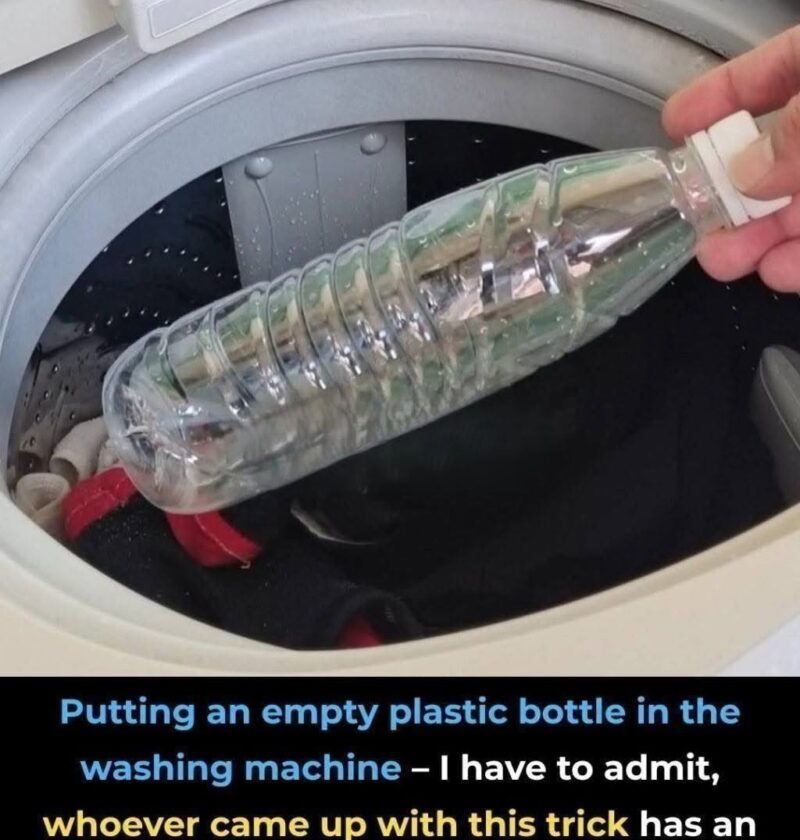
A viral household tip suggests putting an empty plastic bottle inside the washing machine drum during a wash cycle. Many people claim it is a “genius” laundry trick that can improve washing results, protect clothes, or make the machine work better.
The truth is that the usefulness of this trick depends on how it is done and what problem you are trying to solve. Some versions of the hack may have a small practical benefit, while others are exaggerated or could even damage your machine if done incorrectly.
The Idea Behind the Plastic Bottle Trick
The common claim is that an empty plastic bottle placed in the washing machine can:
- Help clothes move around more freely
- Reduce clothes clumping together
- Improve water circulation
- Prevent laundry from becoming tightly tangled
- Help separate items during washing
The theory is that the bottle acts as a lightweight object that creates extra movement inside the drum.
Does It Actually Improve Washing?
Possible Benefits
1. May Help Reduce Tangling
For some loads, especially:
- Sheets
- Large towels
- Lightweight clothing
a hard, smooth object moving around may slightly change how fabrics shift inside the drum.
However, modern washing machines are already designed to move laundry efficiently.
2. May Help Fluff Some Items
Some people use similar ideas with laundry balls or dryer balls to help separate fabrics.
In a dryer, specially designed dryer balls can help improve airflow. A plastic bottle, however, is not made for this purpose and may not provide the same effect.
3. May Be Used as a “Balance Trick”
Some people believe a bottle helps balance the load, but this is not a recommended method.
If a washing machine is shaking excessively, the cause is usually:
- Unevenly distributed laundry
- Overloading
- Machine leveling problems
- Worn suspension components
A bottle will not fix those issues.
Why You Should Be Careful
1. The Bottle Can Break
During a high-speed spin cycle, the drum moves very fast.
A thin plastic bottle may:
- Crack
- Collapse
- Create sharp edges
- Release pieces of plastic
Small plastic fragments can become a problem for:
- Clothing
- Drain systems
- Filters
2. It May Damage Some Machines
Some washing machines, especially high-efficiency models, are designed for carefully balanced loads.
An unapproved object inside the drum could potentially:
- Make unusual noise
- Become trapped
- Affect the spin cycle
3. A Bottle Does Not Replace Proper Laundry Practices
For cleaner clothes, these habits matter much more:
✅ Do not overload the drum
✅ Use the correct detergent amount
✅ Choose the correct wash cycle
✅ Separate heavy and lightweight fabrics
✅ Clean the washing machine regularly
Safer Alternatives That Actually Help
1. Use Laundry Bags
Mesh laundry bags help protect:
- Delicate clothing
- Socks
- Small items
2. Use Dryer Balls (For Dryers)
Wool dryer balls are designed to:
- Separate clothes
- Improve airflow
- Reduce drying time in some situations
They should be used in a dryer, not a washing machine.
3. Wash Large Items Correctly
For bedding and towels:
- Avoid stuffing the drum too full
- Spread items evenly
- Use the correct cycle
How to Keep Your Washing Machine Performing Well
Clean the Drum
Run a cleaning cycle when recommended by the manufacturer.
Check the Filter
Some machines have filters that collect:
- Lint
- Coins
- Small objects
Leave the Door Open After Washing
This helps prevent:
- Musty smells
- Mold growth
- Moisture buildup
Common Laundry Myths
“More detergent means cleaner clothes”
Not always. Too much detergent can leave residue on fabrics and inside the machine.
“Hot water is always best”
Different fabrics require different temperatures. Many modern detergents work well in cooler water.
“The washing machine cleans itself”
It does not. Regular maintenance helps prevent odors and buildup.
Summary
Putting an empty plastic bottle in the washing machine is an interesting viral trick, but it is not a proven way to dramatically improve washing performance. It may slightly affect how some laundry moves around, but the risks of breakage or interference with the machine make it a questionable habit. For better results, focus on proper loading, the right detergent, correct cycles, and regular machine maintenance.