How to Achieve a Deep Piriformis Stretch to Relieve Back, Hip, Gluteal, and Leg Discomfort
Introduction
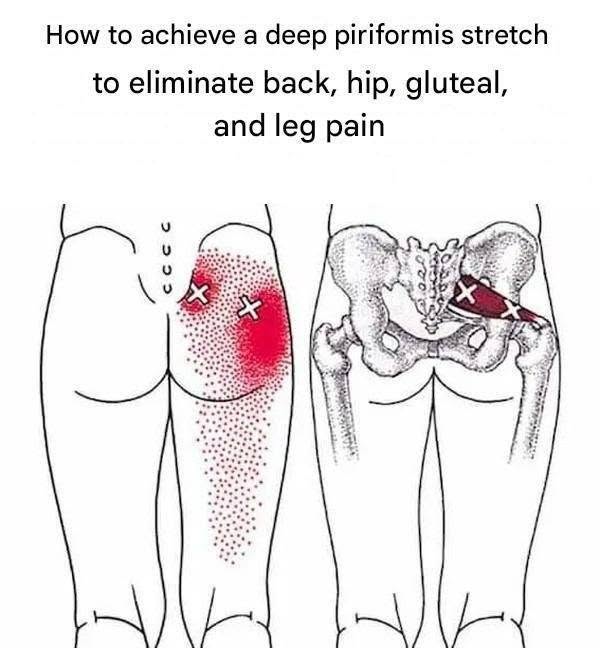
The piriformis muscle is a small, pear-shaped muscle located deep in the buttocks. It connects the lower spine to the top of the thigh bone and plays an important role in hip rotation and stability.
When the piriformis becomes tight or irritated, some people experience discomfort in the:
- Buttocks
- Outer hip
- Lower back
- Back of the thigh
- Leg
This can sometimes resemble sciatica-like symptoms because the sciatic nerve passes close to (and in some people partly through) the piriformis muscle. However, not all leg or back pain comes from the piriformis, and stretching is not appropriate for every condition.
A gentle, consistent mobility routine may help many people improve hip comfort and movement.
Before You Stretch: Safety First
A piriformis stretch should feel like:
✅ A gentle pulling sensation in the buttock or hip
✅ Mild tension that eases with breathing
It should not cause:
❌ Sharp pain
❌ Increasing numbness
❌ Tingling that travels down the leg
❌ Weakness
Stop and seek medical advice if you have severe symptoms, new weakness, loss of bladder or bowel control, or sudden severe pain.
1. Reclined Figure-4 Piriformis Stretch (Most Common)
This is often one of the easiest piriformis stretches because your back is supported.
Steps
- Lie on your back with both knees bent.
- Keep your feet flat on the floor.
- Cross your right ankle over your left thigh, creating a “4” shape.
- Reach behind your left thigh.
- Gently pull the left leg toward your chest.
- Keep your shoulders relaxed and your lower back comfortable.
- Hold for 20–40 seconds.
- Repeat on the other side.
Repetitions
- 2–4 rounds per side
You Should Feel
A stretch deep in the buttock of the crossed leg.
2. Seated Piriformis Stretch
Useful if you spend long periods sitting.
Steps
- Sit upright in a chair.
- Place your right ankle over your left knee.
- Keep your back straight.
- Lean forward slightly from your hips.
- Avoid rounding your spine.
- Hold for 20–30 seconds.
- Switch sides.
Tip
The stretch should come from the hip, not from forcing your back into a rounded position.
3. Supine Knee-to-Opposite-Shoulder Stretch
This targets deeper hip muscles.
Steps
- Lie on your back.
- Bend one knee toward your chest.
- Gently guide that knee toward the opposite shoulder.
- Keep your hips level on the floor.
- Hold for 20–30 seconds.
Repeat on the other side.
4. Pigeon Pose Modification
A yoga-inspired stretch that can be intense.
Beginner Version
- Start on hands and knees.
- Bring one knee forward toward your wrist.
- Extend the opposite leg behind you.
- Keep your hips squared.
- Lower only as far as comfortable.
- Hold for 15–30 seconds.
Important
Do not force this stretch. Deep hip stretches can aggravate symptoms if done aggressively.
5. Standing Figure-4 Stretch
A convenient option when you cannot get onto the floor.
Steps
- Stand near a chair or wall for support.
- Place one ankle over the opposite knee.
- Sit your hips back slightly as if sitting into a chair.
- Keep your chest lifted.
- Hold for 20–30 seconds.
A Gentle 10-Minute Piriformis Routine
Step 1: Warm Up (2 minutes)
Choose one:
- Easy walking
- Gentle hip circles
- Marching in place
Warm muscles usually respond better to stretching.
Step 2: Stretch Sequence
Reclined Figure-4
- 30 seconds each side
- Repeat twice
Seated Figure-4
- 30 seconds each side
Knee-to-Opposite-Shoulder Stretch
- 30 seconds each side
Step 3: Strengthen the Supporting Muscles
Stretching alone may not solve recurring hip discomfort. Strong hip muscles can help support movement.
Try:
Glute Bridges
- Lie on your back.
- Bend your knees.
- Lift your hips slowly.
- Squeeze your glutes.
- Lower with control.
Do:
- 10–15 repetitions
Side-Lying Leg Raises
- Lie on your side.
- Keep your top leg straight.
- Lift slowly.
- Lower with control.
Do:
- 10–15 repetitions per side
Self-Massage Options
Some people find gentle massage helpful.
Tennis Ball Release
- Place a tennis ball under the buttock while seated on the floor.
- Slowly move until you find a tender area.
- Hold gentle pressure for 20–30 seconds.
- Avoid pressing directly on painful nerve sensations.
Do not aggressively roll over areas causing numbness or tingling.
Habits That May Help Reduce Piriformis Tightness
Avoid Long Periods of Sitting
Try:
- Standing every 30–60 minutes
- Taking short walks
- Changing positions frequently
Adjust Sitting Position
Helpful habits:
- Keep both feet supported.
- Avoid always crossing the same leg.
- Use proper chair support.
Improve Hip Mobility
Regular activities such as:
- Walking
- Swimming
- Gentle yoga
- Mobility exercises
can support hip function.
When Piriformis Stretching May Not Be Enough
Consider medical evaluation if you have:
- Pain lasting more than several weeks
- Progressive weakness
- Significant numbness
- Loss of sensation
- Pain after a fall or injury
- Severe nighttime pain
- Difficulty walking
Back and leg pain can also come from issues involving the spine, joints, nerves, or other muscles.
Common Stretching Mistakes
❌ Stretching Too Aggressively
More intensity does not always mean better results.
❌ Holding Your Breath
Relaxed breathing helps reduce unnecessary muscle tension.
❌ Stretching Only One Side
Even if one side hurts, balanced mobility is often helpful.
❌ Ignoring Strength
Strong glutes and hip stabilizers can support long-term comfort.
Summary
A deep piriformis stretch may help relieve tightness and improve comfort in the buttock and hip area for some people. Effective options include the reclined figure-4 stretch, seated piriformis stretch, knee-to-opposite-shoulder stretch, and gentle pigeon pose modifications. The key is consistency, gentle movement, and avoiding stretches that worsen pain or nerve symptoms. If back or leg pain is severe, persistent, or associated with weakness or numbness, professional evaluation is important to identify the underlying cause.