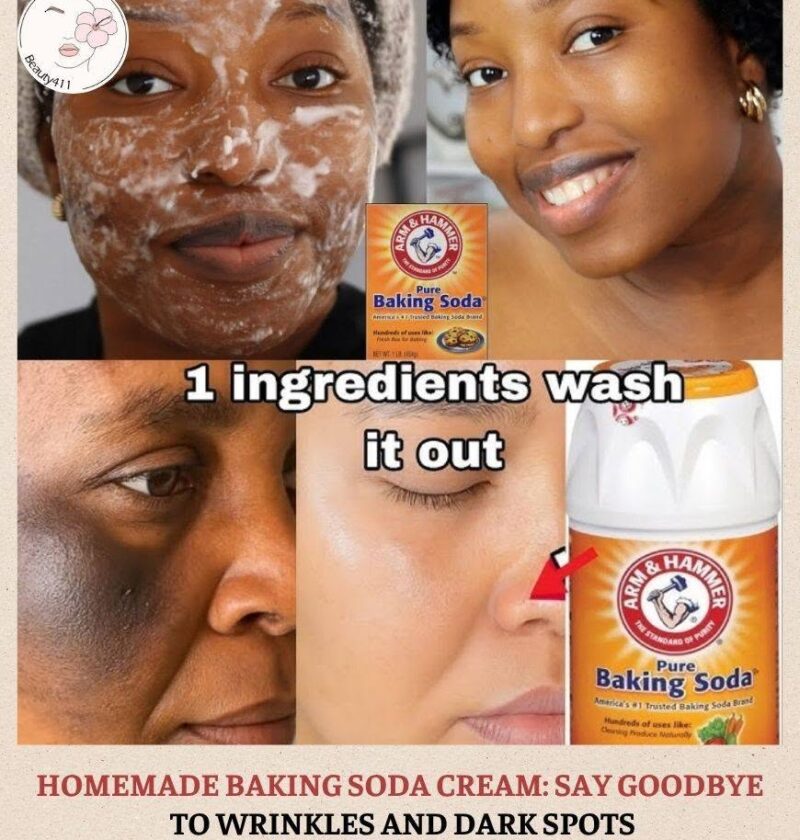
Erase Age Spots Naturally: How Baking Soda Can Give You Flawless Skin
Age spots, also known as liver spots or sun spots, are flat, dark patches that commonly appear on the face, hands, shoulders, and arms after years of sun exposure. While many people look for natural remedies to lighten these spots, baking soda is often mentioned as a simple and affordable option. Although baking soda may help exfoliate dead skin cells and leave the skin feeling smoother, there is no strong scientific evidence that it can safely or effectively remove age spots. In fact, frequent use may irritate the skin or damage its natural protective barrier, especially on sensitive areas like the face.
If you still choose to try baking soda as an occasional exfoliant, it is important to use it carefully and monitor your skin for any signs of irritation.
Why Baking Soda Is Popular for Skin Care
Baking soda (sodium bicarbonate) has mild exfoliating properties that can help remove dead skin cells from the surface of the skin. This temporary exfoliation may make the skin appear brighter and smoother. Some people also use it to help cleanse oily skin or remove surface impurities.
However, baking soda is alkaline, with a much higher pH than healthy skin. Regular application can disrupt the skin’s natural balance, leading to dryness, redness, irritation, and increased sensitivity.
Ingredients
- 1 teaspoon baking soda
- 1–2 teaspoons water (or enough to make a smooth paste)
Optional: A few drops of honey can help reduce dryness, but it does not treat age spots.
How to Prepare the Paste
- Place the baking soda in a small, clean bowl.
- Add water gradually while stirring.
- Mix until a smooth, spreadable paste forms.
- Use the mixture immediately rather than storing it.
How to Apply
- Wash your face or the affected area with a gentle cleanser and pat dry.
- Apply a thin layer of the baking soda paste only to the age spots or desired area.
- Leave it on for no more than 1–2 minutes, especially on the face.
- Gently massage in small circular motions for a few seconds.
- Rinse thoroughly with lukewarm water.
- Apply a fragrance-free moisturizer to restore hydration.
How Often to Use
Limit use to no more than once a week. More frequent use can increase the risk of irritation and damage to the skin barrier.
Important Tips
- Perform a patch test on a small area of skin 24 hours before first use.
- Avoid applying to broken, inflamed, sunburned, or sensitive skin.
- Stop using the paste if you experience burning, excessive redness, itching, or swelling.
- Always wear a broad-spectrum sunscreen (SPF 30 or higher) daily, as sun protection is the most effective way to prevent age spots from becoming darker or new ones from forming.
Better-Supported Options for Age Spots
If your goal is to fade age spots, treatments with better evidence include:
- Daily sunscreen to prevent further darkening.
- Topical ingredients such as vitamin C, niacinamide, retinoids, azelaic acid, or hydroquinone (where appropriate and under medical guidance).
- Professional treatments such as chemical peels, laser therapy, intense pulsed light (IPL), or cryotherapy performed by a qualified dermatologist.
Storage
Because the mixture contains only baking soda and water, it should be prepared fresh each time. Discard any leftover paste rather than storing it.
Frequently Asked Questions
Can baking soda permanently remove age spots?
No. There is no reliable scientific evidence that baking soda can permanently remove or significantly fade age spots.
How long does it take to see results?
Baking soda may make the skin feel smoother immediately because it exfoliates, but it is unlikely to noticeably lighten age spots. Evidence-based treatments typically require several weeks to months of consistent use.
Can I use baking soda every day?
No. Daily use is not recommended because it can disrupt the skin’s natural pH, causing dryness and irritation.
Is baking soda safe for all skin types?
No. People with dry, sensitive, or eczema-prone skin are especially likely to experience irritation from baking soda.
Final Thoughts
Baking soda may provide mild exfoliation, but it should not be considered a proven treatment for age spots. If your age spots change in size, color, shape, or begin to bleed or itch, have them evaluated by a healthcare professional to rule out more serious skin conditions. For lasting improvement, consistent sun protection and evidence-based skincare or dermatologic treatments are safer and more effective choices.