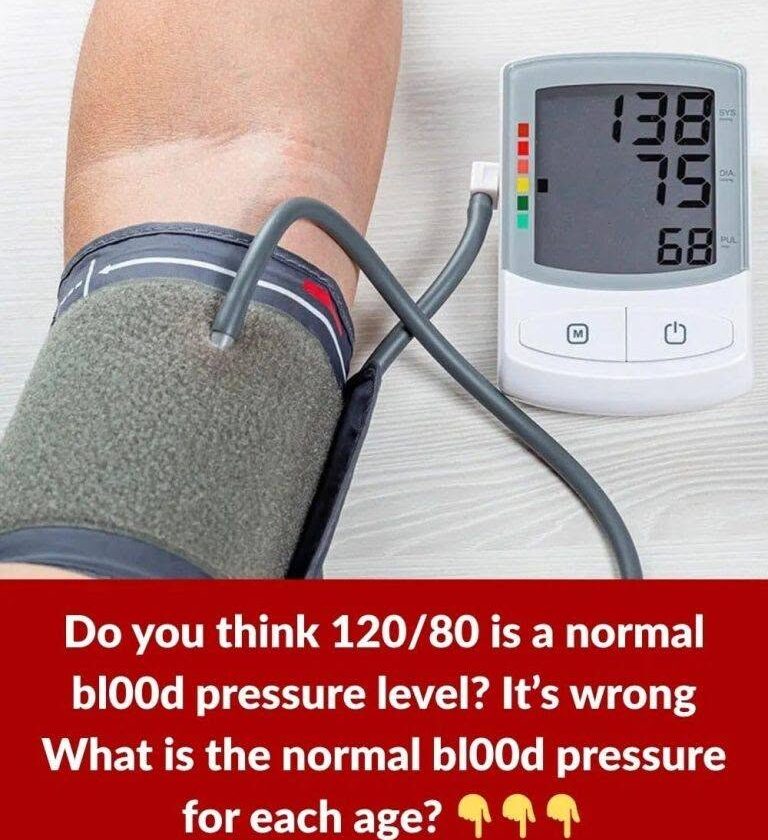
What Is the Normal Blood Pressure for Each Age? 🩺
Blood pressure does not have one fixed “normal” number for every age. It depends on health, medications, lifestyle, and individual risk factors. In general, a healthy adult blood pressure is often around:
Normal: Below 120/80 mmHg
- Top number = systolic pressure (pressure when the heart beats)
- Bottom number = diastolic pressure (pressure when the heart relaxes)
General Blood Pressure Ranges by Age
| Age Group | Common Healthy Range (Approx.) |
|---|---|
| Children | Varies greatly by height and age |
| Teens (13–17) | Around 90–120 / 60–80 mmHg |
| Adults (18–39) | Around 110–120 / 70–80 mmHg |
| Adults (40–59) | Often around 110–130 / 70–85 mmHg |
| Adults 60+ | Often around 120–140 / 70–90 mmHg (individual goals vary) |
Blood Pressure Categories (Adults)
Normal
✅ Less than 120/80
Elevated
⚠️ 120–129 systolic and less than 80 diastolic
High Blood Pressure (Hypertension)
⚠️ 130/80 or higher (confirmed on repeated readings)
Very High
🚨 Around 180/120 or higher
- Especially concerning if there are symptoms like:
- Chest pain
- Trouble breathing
- Weakness
- Confusion
- Severe headache
How to Measure Blood Pressure Correctly
For a more accurate reading:
- Sit quietly for 5 minutes
- Keep feet flat on the floor
- Rest your arm at heart level
- Avoid caffeine, smoking, or exercise for about 30 minutes before checking
- Take 2 readings a minute apart and record them
Things That Can Raise Blood Pressure Temporarily:
- Stress
- Pain
- Lack of sleep
- Caffeine
- Exercise
- A full bladder
Ways to Support Healthy Blood Pressure:
✅ Reduce excess salt
✅ Eat more fruits and vegetables
✅ Exercise regularly
✅ Maintain a healthy weight
✅ Manage stress
✅ Avoid smoking
✅ Take prescribed medicines if needed
A single reading does not always show your true blood pressure — trends over time are more useful.