“Peace Lily: Thanks to This One Ingredient, It Will Bloom for Up to 10 Years in a Row” — What’s Really True
Peace lilies (Spathiphyllum) are popular houseplants because they are attractive, relatively easy to care for, and can produce elegant white flowers (called spathes). However, claims that one secret ingredient will make a peace lily bloom continuously for 10 years are usually exaggerated.
There is no single ingredient that guarantees years of nonstop blooming. Long-lasting flowers come from a combination of proper light, watering, nutrients, temperature, and plant health.
What actually helps a peace lily bloom
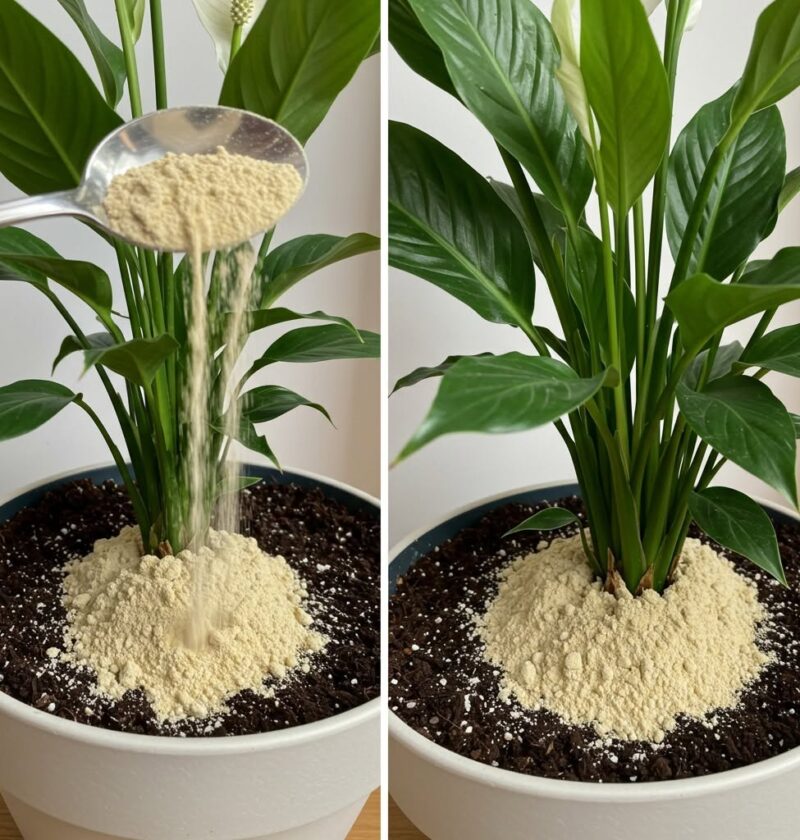
1. The right fertilizer (the “secret ingredient” many claims refer to)
Peace lilies need nutrients to produce flowers. A balanced houseplant fertilizer can help, especially one containing:
- Nitrogen (N): supports healthy green leaves.
- Phosphorus (P): supports flower production and root development.
- Potassium (K): supports overall plant strength.
A fertilizer with a slightly higher phosphorus level may encourage blooming, but too much fertilizer can damage the plant.
How to use it:
- Feed during the active growing season (usually spring and summer).
- Follow the product instructions.
- Avoid overfeeding.
2. Bright, indirect light
Light is one of the biggest factors affecting flowering.
Peace lilies prefer:
✅ Bright filtered light
✅ Near an east- or north-facing window (depending on climate)
✅ Protection from harsh direct sunlight
Too little light:
- Leaves may grow well.
- Flowers may rarely appear.
Too much direct sun:
- Leaves can scorch or turn brown.
3. Proper watering
Peace lilies are known for dramatic drooping when thirsty, but they should not be kept constantly soaked.
Best practice:
- Water when the top layer of soil feels slightly dry.
- Use a pot with drainage holes.
- Empty excess water from trays.
Overwatering can cause:
- Yellow leaves.
- Root rot.
- Poor flowering.
4. Humidity matters
Peace lilies are tropical plants and enjoy moisture in the air.
Helpful steps:
- Keep them away from very dry heating vents.
- Use a humidifier if indoor air is extremely dry.
- Group plants together to increase local humidity.
5. Repotting and healthy roots
A peace lily that is root-bound may struggle.
Signs it may need repotting:
- Roots growing out of drainage holes.
- Soil drying extremely quickly.
- Slow growth.
Repot into a slightly larger container rather than a very large one, which can hold too much moisture.
Common “miracle ingredients” and the truth
Banana peels
Often recommended online because they contain potassium.
Reality:
- Banana peels do contain nutrients.
- Putting raw peels in soil can attract pests and may not provide nutrients in a useful form quickly.
A proper fertilizer is usually more reliable.
Coffee grounds
They contain organic matter and some nutrients.
However:
- Fresh coffee grounds can affect soil conditions.
- Too much may encourage mold or compact the soil.
Composted grounds are safer.
Eggshells
They contain calcium, but they break down very slowly.
They are not a quick blooming solution.
How long can a peace lily live?
With good care, peace lilies can live for many years—sometimes a decade or more. Their flowers, however, appear in cycles rather than continuously.
A healthy plant may bloom:
- Several times per year under good conditions.
- More frequently with ideal light and nutrition.
A simple care routine for long-term blooming
- Place it in bright, indirect light.
- Water when the top soil begins to dry.
- Feed lightly during growing months.
- Remove old flowers and yellow leaves.
- Keep humidity moderate.
- Repot when roots become crowded.
Bottom line
There is no magic ingredient that makes a peace lily bloom for 10 years straight, but consistent care and proper nutrition can keep the plant healthy and encourage regular flowering for many years. The most important “secret” is usually the right balance of light, water, and fertilizer—not one homemade additive.