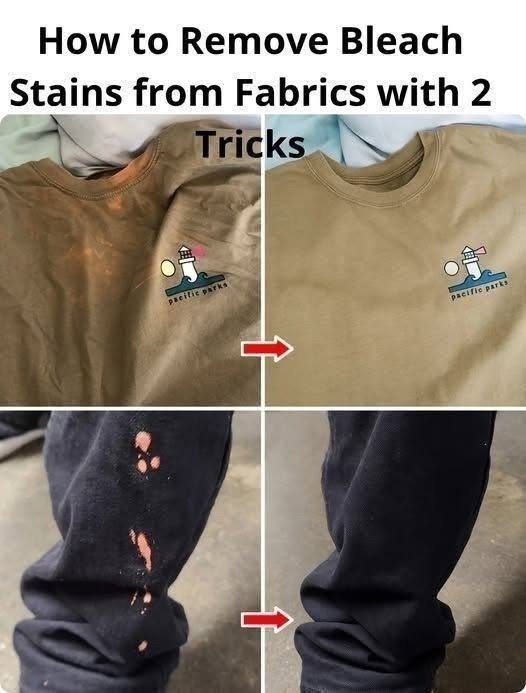
How to Remove Bleach Stains from Fabrics with 2 Simple Tricks
Bleach is one of the most effective household cleaners and whiteners, but it can also be one of the most frustrating products to spill on clothing. Whether it’s a splash of chlorine bleach while doing laundry or a few drops of a cleaning solution, bleach stains can leave unsightly white, yellow, or faded spots on fabric.
The first thing to understand is that bleach stains are different from ordinary stains. Unlike coffee, grease, or ink, bleach doesn’t leave something on the fabric—it actually removes the fabric’s dye. Once the color has been stripped away, it cannot be washed out. However, there are a couple of effective tricks that can make the damaged area much less noticeable or even restore its appearance.
Below are two of the most practical methods, along with tips for preventing further damage.
Before You Begin
If the bleach spill has just happened:
- Immediately rinse the fabric under cold running water.
- Continue rinsing for several minutes to dilute and remove any remaining bleach.
- Gently blot the area with a clean cloth.
- Avoid rubbing, as this may spread the bleach.
Quick action can stop the bleach from damaging a larger area.
Trick 1: Restore the Color with a Fabric Marker or Permanent Marker
This is one of the easiest and most effective ways to hide small bleach spots.
Best for
- Small bleach splashes
- Tiny white dots
- Dark-colored clothing
- Jeans
- Black T-shirts
- School uniforms
What You’ll Need
- Fabric marker or fabric dye pen
- Permanent marker (only if you don’t have a fabric marker)
- Cotton swab
- Piece of cardboard
- Clean cloth
Steps
- Wash and dry the garment.
- Place cardboard inside the clothing to prevent color from bleeding through.
- Choose a marker that closely matches the fabric color.
- Test the color on an inside seam first.
- Carefully color only the faded area.
- Let the ink dry completely.
- If necessary, apply a second light coat for better blending.
Tips
- Fabric markers generally produce a more natural finish than permanent markers.
- Blend the edges gently to avoid creating a noticeable outline.
- For patterned fabrics, matching the original design may require multiple colors.
Trick 2: Re-Dye the Fabric
If the bleach stain is large or there are multiple spots, re-dyeing the entire garment often gives the best results.
Best for
- Large bleach stains
- Faded clothing
- Cotton garments
- Linen
- Rayon
- Natural-fiber fabrics
What You’ll Need
- Fabric dye suitable for your fabric type
- Rubber gloves
- Large bucket or sink
- Warm water
- Stirring stick
- Salt or dye fixative (if required by the dye instructions)
Steps
- Wash the garment to remove any dirt or residue.
- Prepare the dye bath according to the manufacturer’s instructions.
- Submerge the garment completely.
- Stir regularly to ensure even color distribution.
- Leave it in the dye bath for the recommended time.
- Rinse until the water runs clear.
- Wash separately the first time and allow the garment to air dry.
Tips
- Dark colors such as black, navy, or dark brown often cover bleach stains more effectively than lighter shades.
- Synthetic fabrics like polyester may require special dyes designed specifically for synthetic fibers.
Can You Reverse a Bleach Stain?
Unfortunately, no.
Bleach removes or destroys the fabric’s dye. Once the color has been chemically removed, it cannot simply be washed back in.
What you can do is:
- Recolor the affected area.
- Dye the entire garment.
- Cover the stain creatively.
- Repurpose the clothing if the damage is extensive.
Alternative Ways to Hide Bleach Stains
If coloring isn’t an option, consider these creative solutions:
Decorative Patches
Iron-on or sew-on patches can cover larger bleach spots while adding a personalized look.
Embroidery
Decorative stitching or embroidered designs can transform a damaged area into a unique feature.
Fabric Paint
Fabric paint allows you to create designs, patterns, or artwork that completely disguise bleach marks.
Tie-Dye
If multiple bleach spots are scattered across the garment, you can intentionally dye or tie-dye the entire item to create a new, cohesive look.
What Not to Do
Avoid these common mistakes:
- Don’t use more bleach in an attempt to “even out” the color—it will only remove more dye.
- Don’t scrub the stain aggressively, as this can damage the fabric fibers.
- Don’t use chlorine bleach on colored fabrics unless the care label specifically says it’s safe.
- Don’t mix bleach with ammonia, vinegar, or other cleaning products, as this can produce hazardous gases.
How to Prevent Future Bleach Stains
- Wear old clothing when cleaning with bleach.
- Dilute bleach according to the product instructions.
- Use gloves to improve your grip and reduce spills.
- Keep bleach containers tightly closed when not in use.
- Wash your hands after handling bleach before touching clothing.
- Add bleach to the washing machine only after it has filled with water (if your machine’s instructions recommend this) to reduce the chance of concentrated bleach contacting fabrics directly.
Frequently Asked Questions
Can vinegar remove bleach stains?
No. Vinegar cannot restore color that has been removed by bleach. It may help neutralize residual bleach if used appropriately after thorough rinsing, but it will not reverse discoloration. Never mix vinegar directly with bleach, as this releases toxic chlorine gas.
Does rubbing alcohol fix bleach spots?
No. Rubbing alcohol does not restore lost dye and is generally ineffective for bleach damage.
Can bleach stains be completely repaired?
Small spots can often be disguised very effectively with a matching fabric marker or dye. However, because bleach permanently removes color from the fibers, complete restoration to the original appearance is usually not possible.
Final Thoughts
Bleach stains are permanent color loss rather than removable stains, so they require a different approach. For small spots, a fabric marker or carefully matched dye pen can make the damage nearly invisible. For larger or multiple stains, re-dyeing the entire garment often produces the most even and attractive result. With prompt action, the right materials, and a little creativity, many bleach-damaged garments can be given a fresh, wearable appearance instead of being discarded.