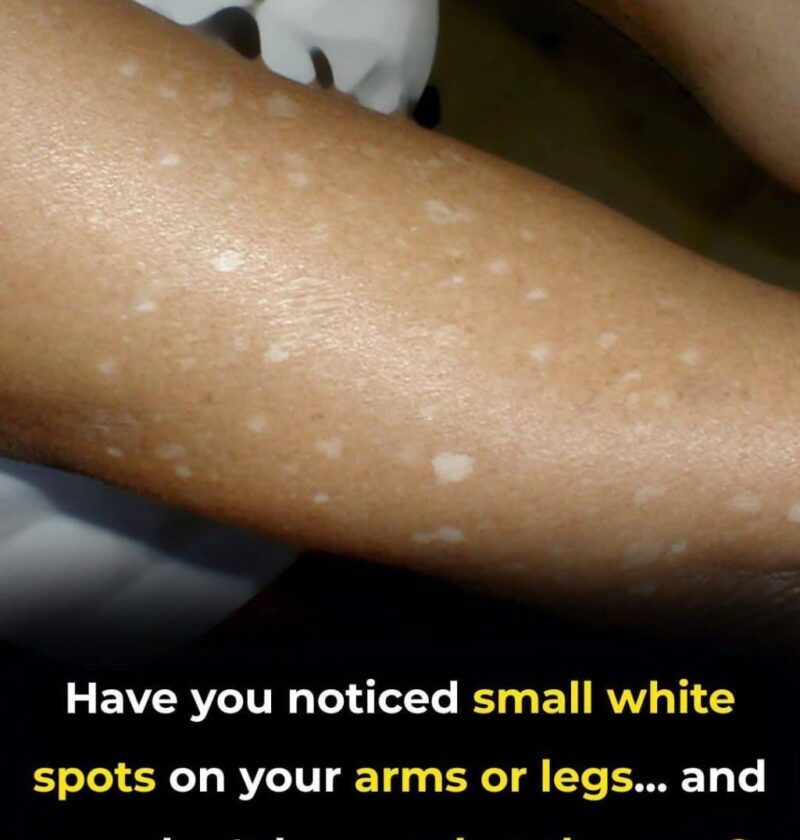
Have You Noticed Small White Spots on Your Arms or Legs… and You Don’t Know What They Are?
Finding small white spots on your skin can be surprising, but in many cases they’re harmless. These spots can develop for several reasons, ranging from normal aging and sun exposure to common skin conditions. Knowing the possible causes can help you decide whether they simply need monitoring or should be checked by a healthcare professional.
1. Sun-Related White Spots
One of the most common causes is idiopathic guttate hypomelanosis (IGH). These are small, flat, white spots that often appear on the arms, legs, or other areas frequently exposed to the sun.
Characteristics:
- Small (2–5 mm), round or oval white spots
- Smooth and painless
- More common after age 40
- Usually increase gradually over time
IGH is harmless and does not require treatment, although some people seek cosmetic treatment.
2. Fungal Skin Infection
A common fungal infection can cause lighter patches on the skin, especially in warm, humid climates.
Signs may include:
- White, pink, or light brown patches
- Fine scaling
- Mild itching
- More noticeable after sun exposure
A healthcare professional can recommend antifungal creams or shampoos if needed.
3. Dry Skin
Very dry skin may develop small pale patches or flaky areas that become more noticeable, particularly during winter.
Keeping your skin moisturized can often improve its appearance.
4. Vitiligo
Vitiligo is a condition in which the skin loses pigment because pigment-producing cells stop functioning in certain areas.
Features include:
- Well-defined white patches
- May enlarge over time
- Can appear anywhere on the body
- Sometimes affects hair, eyebrows, or eyelashes
Vitiligo is not contagious, but it should be evaluated by a healthcare professional for diagnosis and discussion of treatment options.
5. Eczema
After eczema heals, the affected skin may temporarily appear lighter than the surrounding skin. This usually improves gradually over time.
6. Nutritional Deficiencies
In some cases, deficiencies in certain nutrients—such as vitamin B12, copper, or iron—may contribute to changes in skin pigmentation. However, white spots are not a reliable sign of a vitamin deficiency, and many other causes are more common.
When Should You See a Healthcare Professional?
Arrange a medical evaluation if:
- The white spots are spreading rapidly.
- They are accompanied by itching, pain, redness, or scaling.
- The spots appear suddenly without an obvious cause.
- You notice changes in the color of your hair or patches on other parts of your body.
- You’re unsure of the cause or are concerned about the appearance of your skin.
Can White Spots Be Prevented?
Depending on the cause, these tips may help:
- Use sunscreen to reduce sun damage.
- Moisturize your skin regularly.
- Wear protective clothing during prolonged sun exposure.
- Keep your skin clean and dry, especially in hot, humid weather.
- Seek prompt treatment for persistent rashes or fungal infections.
The Bottom Line
Small white spots on the arms or legs are often harmless, especially if they are due to sun-related pigment loss or dry skin. However, they can also be caused by fungal infections, vitiligo, or other skin conditions. If the spots are changing, spreading, or accompanied by other symptoms, it’s best to have them assessed by a healthcare professional for an accurate diagnosis and appropriate treatment.