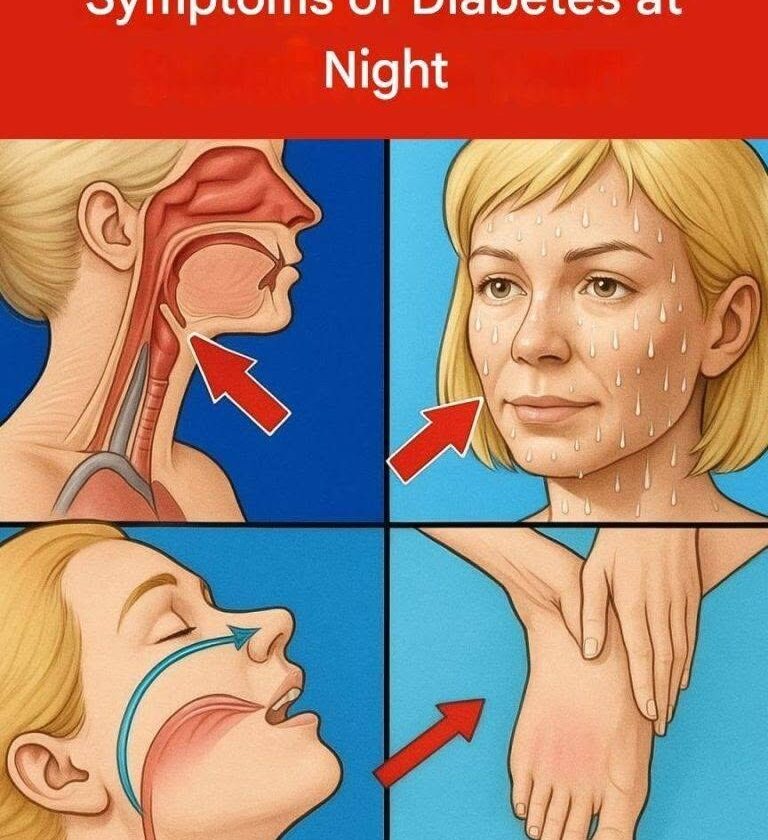
1. Frequent Urination During the Night (Nocturia)
High blood sugar causes the kidneys to remove excess glucose through the urine. This pulls more water into the urine, leading to frequent nighttime bathroom trips.
You may notice:
- Waking up several times to urinate
- Passing large amounts of urine
- Increased thirst afterward
2. Excessive Thirst
Because the body loses more fluid through frequent urination, you may wake up feeling very thirsty or with a dry mouth.
Signs include:
- Needing water during the night
- Persistent dry mouth
- Feeling dehydrated even after drinking
3. Night Sweats
Night sweats can occur if blood sugar drops too low during sleep (more common in people taking insulin or certain diabetes medications). They are less commonly caused by high blood sugar itself.
Possible symptoms:
- Waking up drenched in sweat
- Shaking or trembling
- Feeling anxious or having a rapid heartbeat
4. Tingling, Burning, or Numbness in the Feet
Persistently high blood sugar over time can damage nerves, a condition called diabetic neuropathy. Symptoms often become more noticeable at night.
You may experience:
- Tingling or “pins and needles”
- Burning pain
- Numbness or increased sensitivity in the feet
5. Restless Sleep and Fatigue
Fluctuating blood sugar, thirst, frequent urination, or discomfort from nerve symptoms can interrupt sleep, leaving you tired during the day.
Common signs:
- Waking frequently
- Difficulty staying asleep
- Feeling exhausted despite spending enough time in bed
When to seek medical advice
If you have these symptoms—especially if they’re accompanied by increased thirst, frequent urination during the day, unexplained weight loss, blurred vision, or slow-healing wounds—it’s worth seeing a healthcare professional. They may recommend a blood glucose test or an HbA1c test to check for diabetes.
If you already have diabetes and experience repeated nighttime sweating, confusion, seizures, or difficulty waking up, seek medical advice promptly, as these can be signs of significant low blood sugar that may require adjustments to your treatment.